
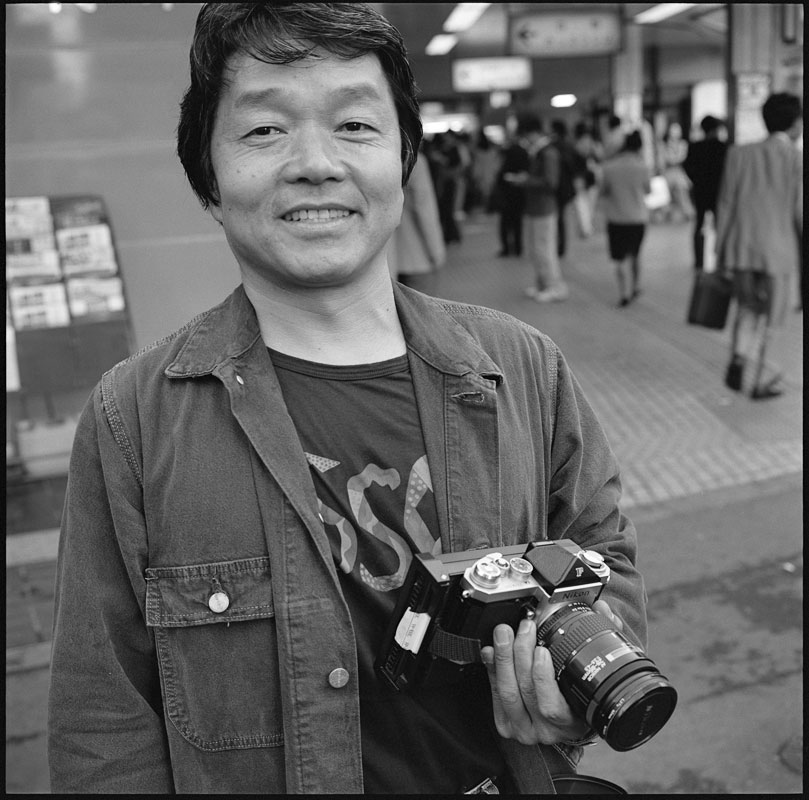
 Warm and generous is the way to describe the Japanese. Every culture is wrapped in stereotypes, and Japan is no exception. You just need to slow down and look.
Category Archives: Japan
Futon Daiko: Kaidan
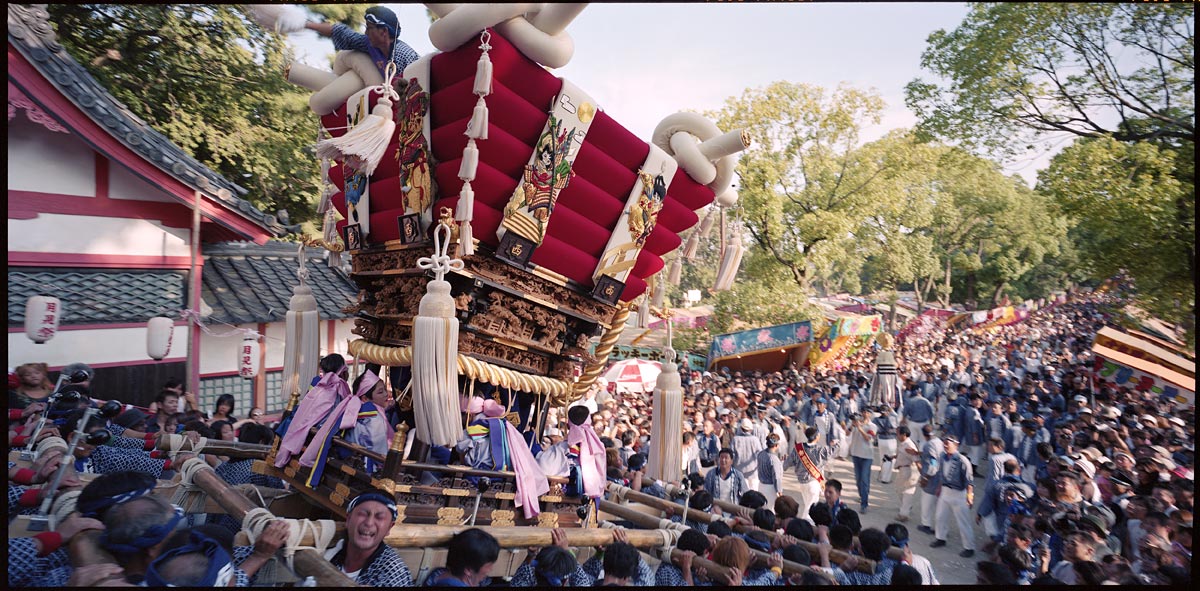
The Futon Daiko festival at Mozu-Hachiman Shrine in Sakai, Japan is an amazing event. Each of the nine towns have their own float, or dashi. Two teams of fifty to seventy men are needed to carry these two and a half ton structures. And they do not simply carry them, but march in a straight-legged gait and sing.
The real trial for these men are the steps, or kaidan, that lead to the main shrine. After carrying the dashi all day, the floats are taken up and down these steps multiple times. It is a dangerous maneuver, but a crowd pleaser. Click on the image for a larger view.

Kanda, the Book District of Tokyo
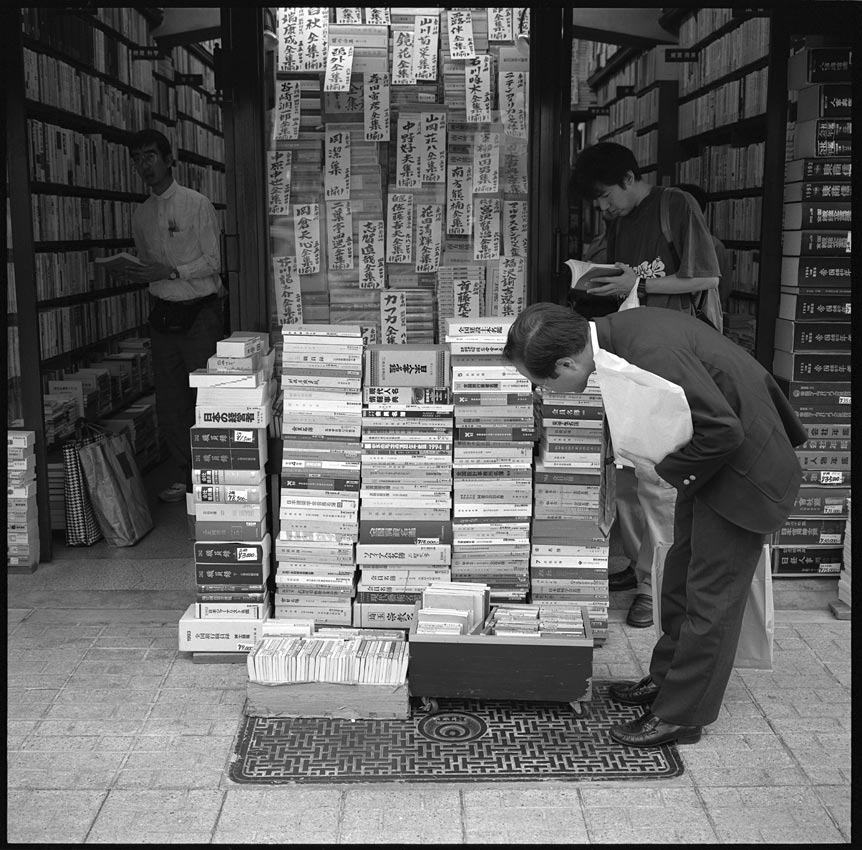 When Tokyo was being built in the 17th century—it was called Edo then—the city was planned into districts and quarters based of crafts or markets. Starting with the Confucian academy in the late 1600s, Kanda became a center of learning and publishing. These divisions blended and dissolved with the growth of the city. Today, the streets of Kanda are still punctuated by small used bookstores.
As someone who grew up reading, walking into a bookstore in Japan was really humbling. You figure there would be enough information to at least find major categories of books, like photographic books. It is not that easy. If you really want to know how debilitating illiteracy is, visit a Japanese bookstore.
Mõja-okuri: The End of New Years
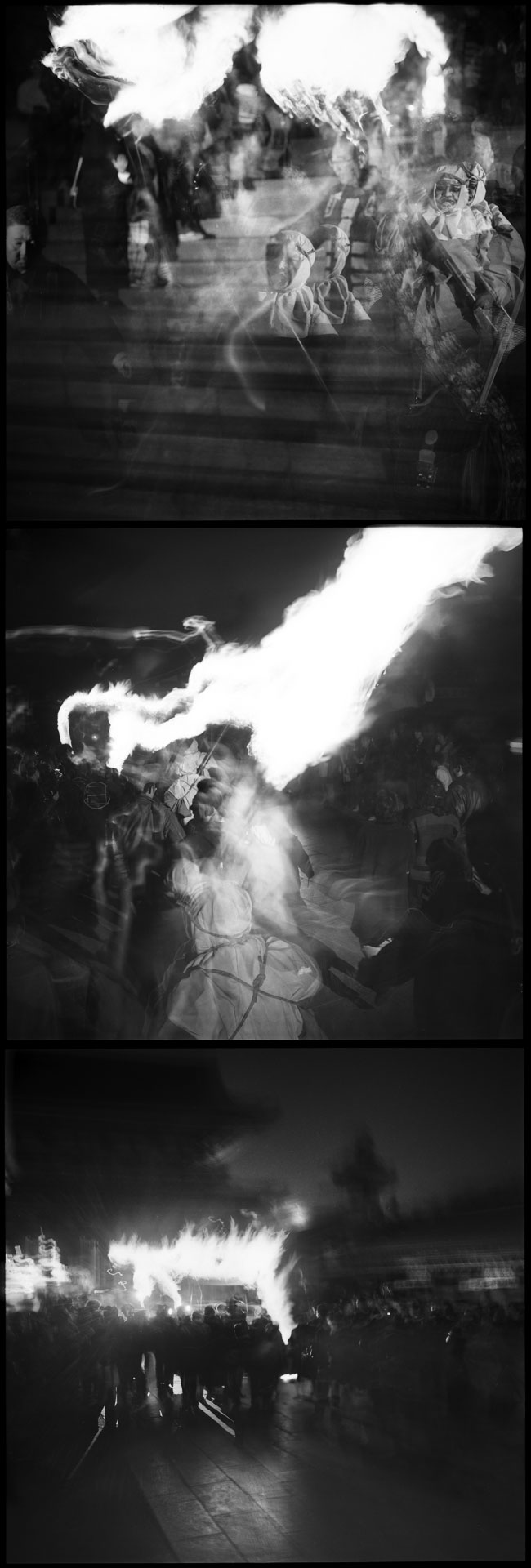 Moja-okuri is a rite that signals the end of the New Year celebrations in Japan. This ritual takes place on January 18th at Senso-ji, also known as Asakusa Kannon Temple in Tokyo.
After dark, the lights are turned off in the temple grounds. It is pitch black. Two priest dressed as demons and carrying flaming torches run out of the main hall and through the precincts. They leave the temple grounds and go to a nearby site where the torches are extinguished in a small pit. The whole event is over in five minutes.
The priests represent evil spirits—one red, one blue. If the sparks from the torches fall on you, it is believed you will have good health throughout the year. People collect the ashes that fall from the torches as good luck charms.
The Legend of Binzuru
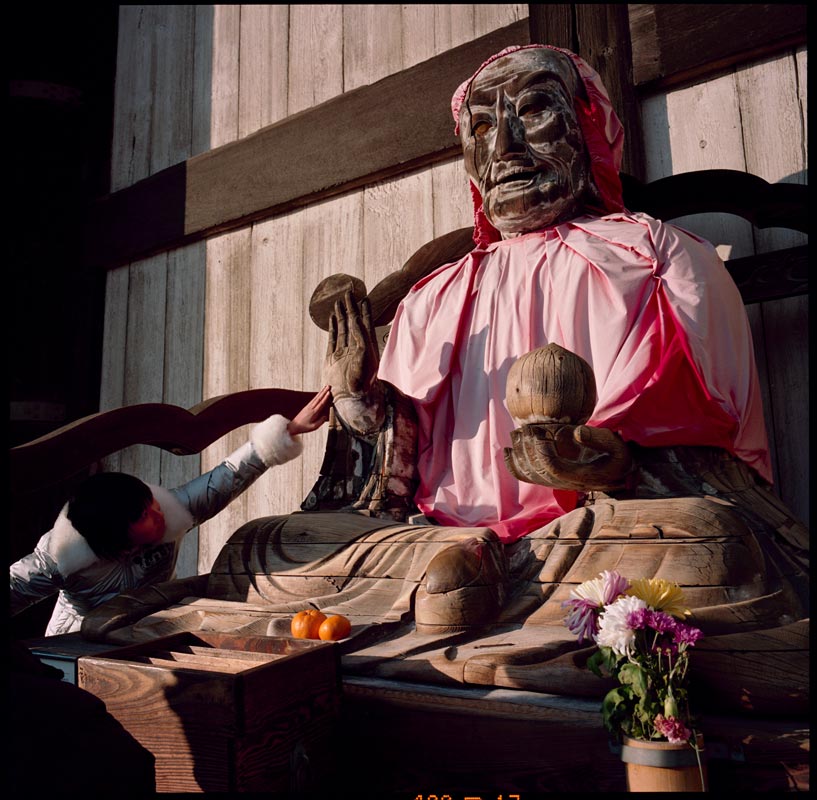 Sitting outside many temples in Japan is the well-worn figure of Binzuru. He is one of the most charming characters in Buddhism. His power to heal was matched by his love of drink.
One day, the Buddha asked Binzuru to visit a wealthy man whose family was plagued by evil spirits with the simple instructions to exorcise the spirits and to leave without falling into temptation. Binzuru banished the demons in the house. The wealthy man, being grateful, wanted to celebrate. After repeated offers of drink, Binzuru capitulated to have one drink as not to be rude to his host. It was not long before he was drunk and the spirits returned.
The Buddha, hearing of this, banished Binzuru from his company. Binzuru, filled with regret, followed the Buddha around the country and sat outside the Buddha’s tent to hear his sermons. On his deathbed, the Buddha, knowing of his loyalty, called for Binzuru and forgave him. He commanded Binzuru to remain in the world as a healer. Binzuru sits outside the temple so people come to him to ease their suffering—it is thought if you rub the part of the statue that corresponds to the part of the body that is ailing, it will be cured.
This particular statue of Binzuru is outside Todai-ji in Nara. During New Years, mandarin oranges are left as offerings. Click on the image to see a larger view.
New Years in Japan
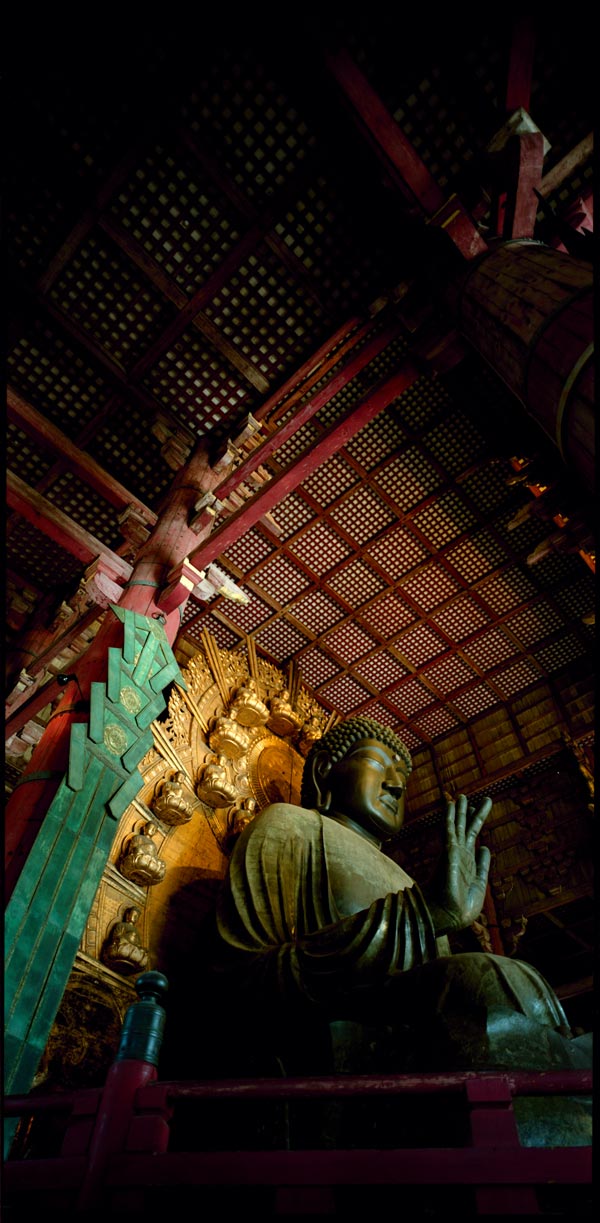 New Years in Japan is a special time. Unlike the West, where it is a fun party on the eve of the first, in Japan, the celebration is observed for several days, and rites and traditions can last the month of January. Visiting the local shrine or temple is a major event, known as hatsumode. One of the most visited temples is Todai-ji in Nara, which houses the world’s largest bronze Buddha. The figure is about 15m/50ft in height.
Maruhoyama Kofun and the Mozu Necropolis
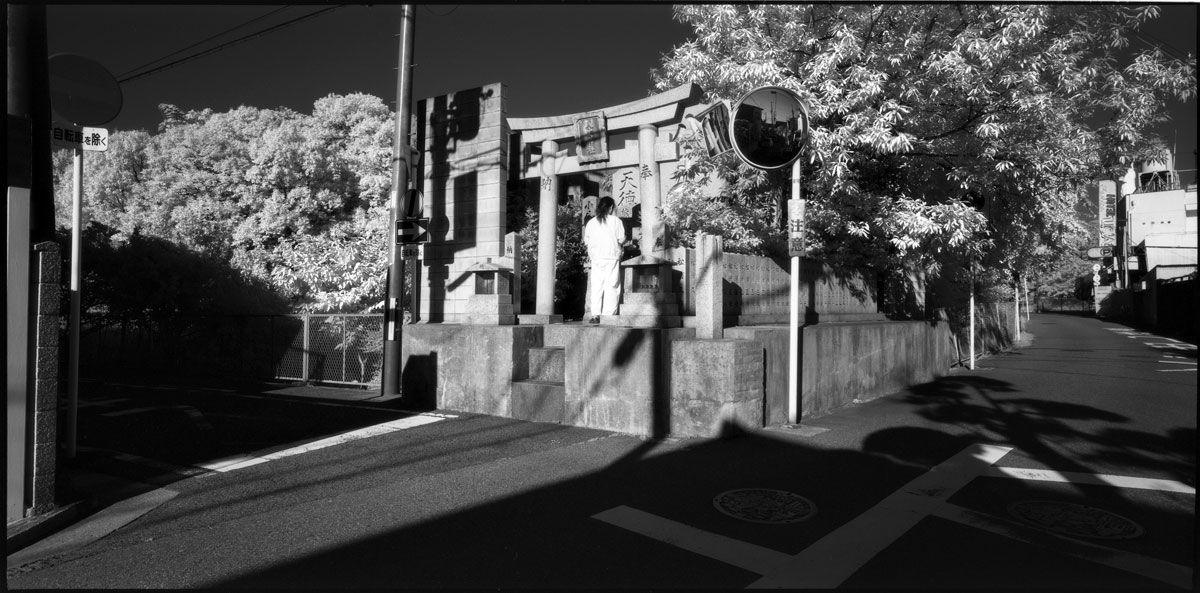 Hachijou shrine in front of Maruhoyama Kofun. Maruhoyama Kofun is also thought to be a satellite mound to Daisen Kofun. There is very little known about these sites nor the people that built them. Click on an image for a larger view.
Nagayama Kofun and the Mozu Necropolis
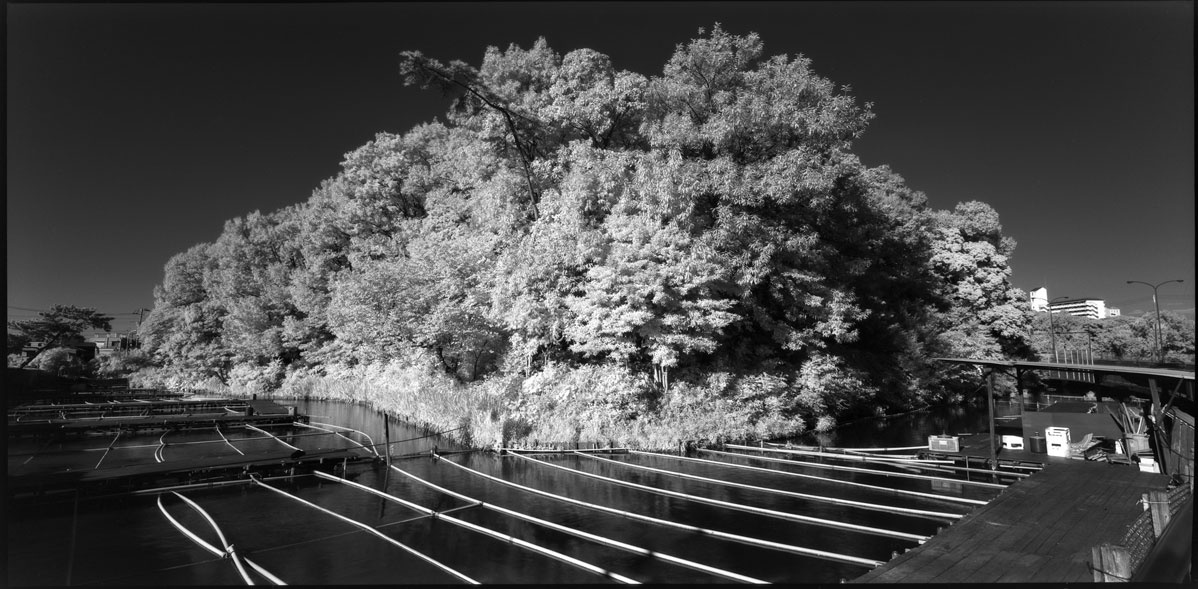
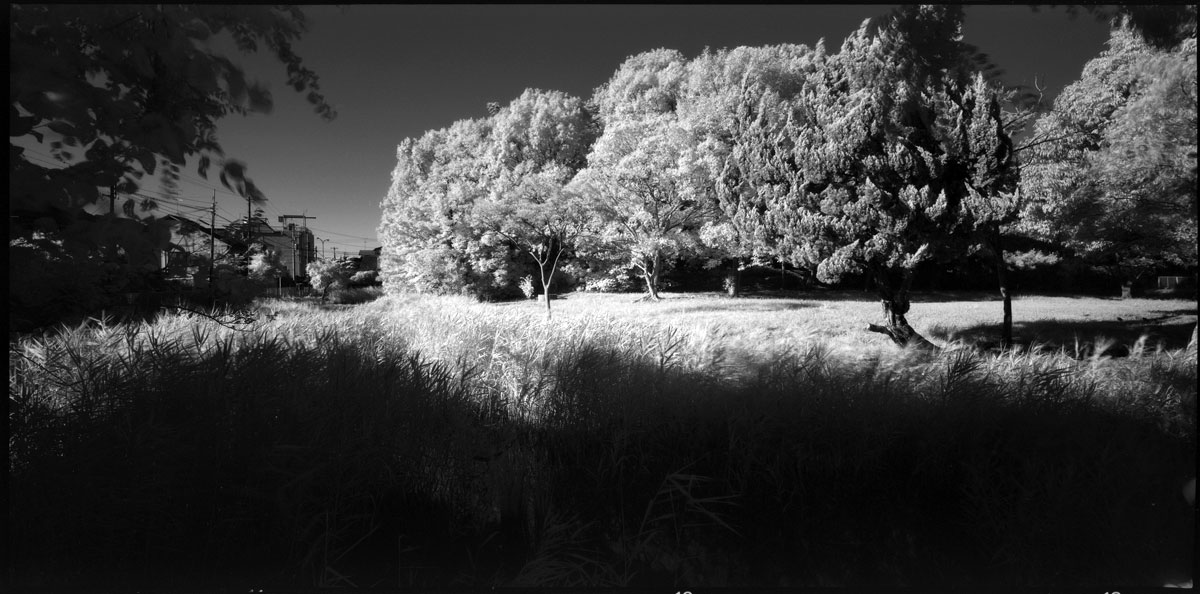
Nagayama Kofun is considered one of the satellite mounds of Daisen Kofun. Whether this was an individual grave site or a site for servants or retainers is unknown. The moat of Nagayama Kofun at one time had a rather mundane function—for 95 years, it was a popular fish farm were local sport fishermen came to relax. The farm was closed in 2011 after a long, and somewhat odd, legal battle with the city of Sakai. Click on the image for a larger view.
Chinaoka Kofun and the Mozu Necropolis
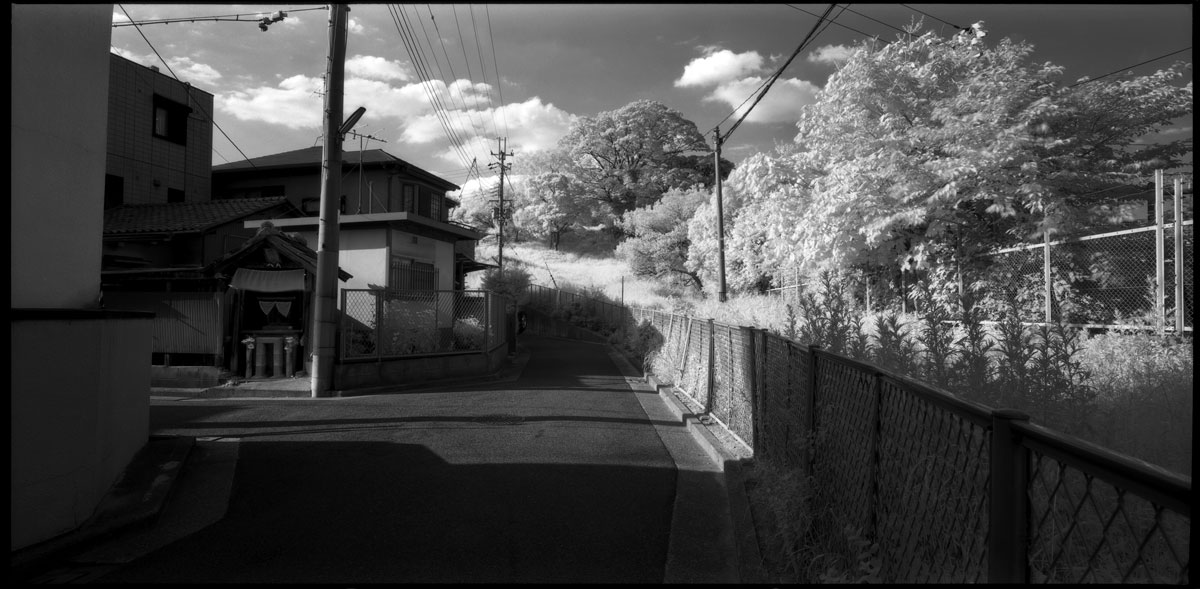 Chinaoka Kofun is the oldest of the Mozu Necropolis. While there are many spectacular Kofun in Sakai, of the known 107 historical sites, sixty one have been destroyed and many of the remaining forty six damaged. Only the tip and sliver of the main mound remains of Chinaoka Kofun, the rest destroyed by the encroaching neighborhood. A small shrine has been built next to the Kofun, which can be seen to the left of the electric pole in the image. Click on the image for a larger view.
Jounoyama Kofun and the Mozu Necropolis
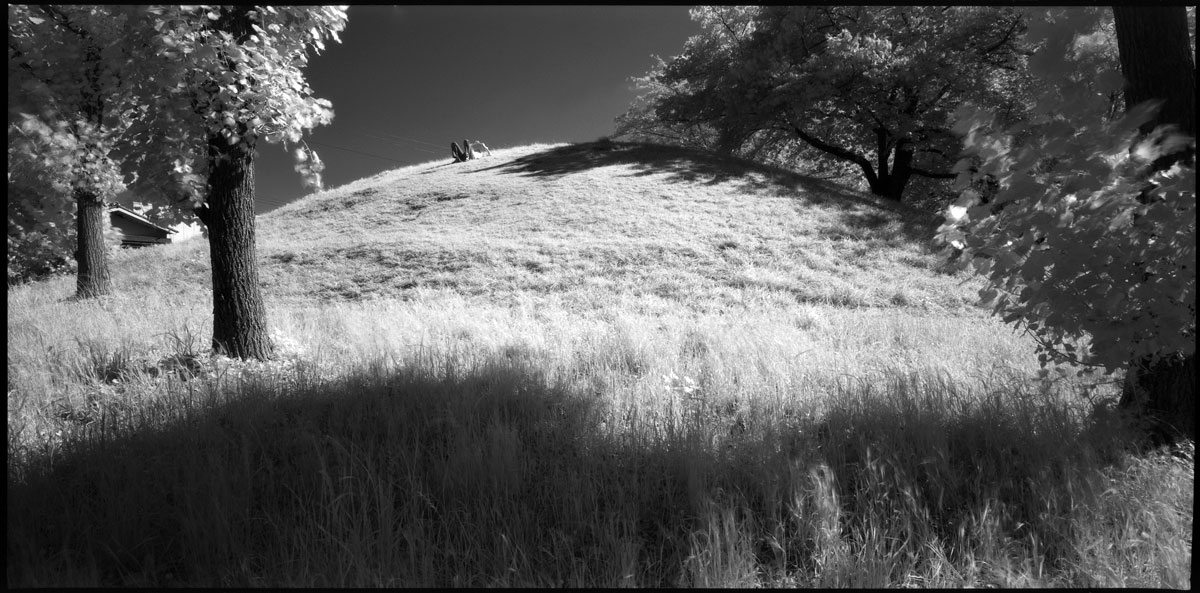
The Japanese had been building Kofun in this area for hundreds of years. The early graves were small mounds. Jounoyama Kofun, like many of the smaller mounds, is now a small neighborhood park. What treasures these burial sites may have contained are long since lost. Click on the image for a larger view.
