 Tsukiji wholesale market, which trades in seafood and produce, covers about 22.5 hectares/56 acres with the fish market taking up the majority of the area. Built on reclaimed land in Tokyo Bay, much of the architecture dates back to its opening in 1935. The large, curved structure, which typifies the market, houses the intermediate seafood wholesalers. The auction areas are just outside that on the waterfront. Ongoing renovations have made the buildings a warren of passages and alcoves. Click on the image for a larger view.
Category Archives: Japan
Tsukiji Fish Market—Part 3
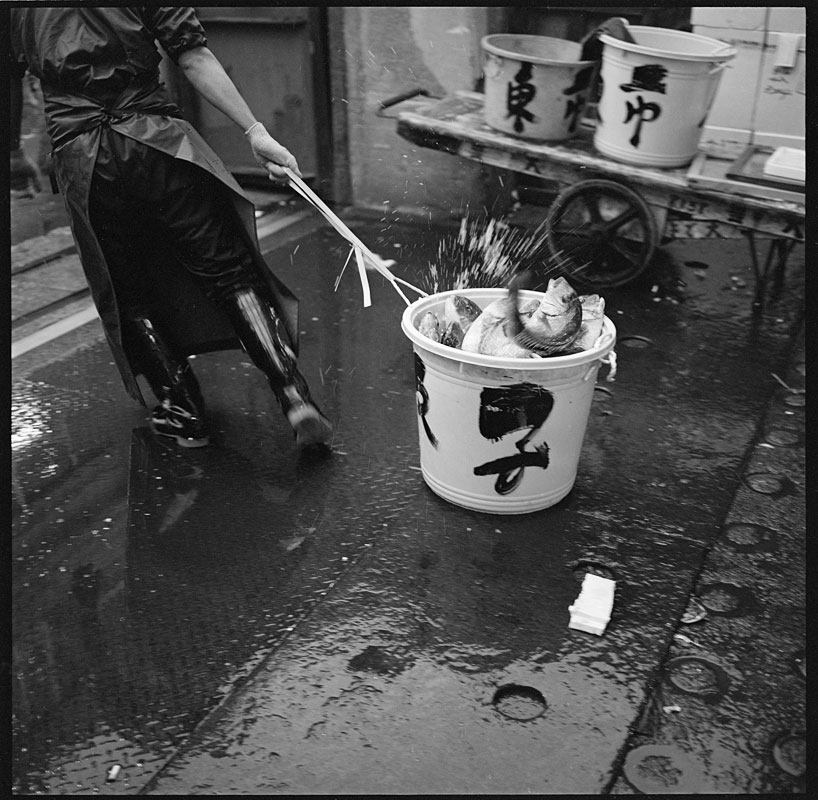 About 2,500 metric tons of fish and seafood move through the market every day. 450 varieties of fish are sold. Click on the image for a larger view.
Tsukiji Fish Market—Part 2
 Just after midnight, trucks with frozen tuna roll into Tsukiji Fish Market. They are there for the early morning auctions. When the workers open the back doors of a truck, they pull the fish out onto a large tire on the floor to break its fall. The tuna is then dragged over the concrete like a huge ice cube and placed in orderly rows.
One night, I was standing on the wharf between a tuna truck and the water. The men unloaded some fish. They swung the doors shut. The truck slowly rolled forward as if it is was leaving. It stopped. Suddenly, the truck roared into reverse and shot backwards. The driver hit the brakes and the load of frozen fish in the back of the trailer hurtled toward the closed doors, hitting them like repeating cannon fire. The men swung the doors open and continued unloading the cargo. Although, when it happen, I was not thinking about what they were doing. I was wondering which was the better choice, getting run over by a fish truck or jumping into Tokyo Bay. Click on the image for a larger view.
Tsukiji Fish Market—Part 1
 Just a stone’s throw from the center of Tokyo is Tsukiji Fish Market. A small city unto itself, this area has a life and vitality that is not really reflected in the offices of the metropolis. Click on the image for a larger view.
On the Streets of Tokyo—Harajuku
 Click on the image for a larger view.
Futon Daiko: Celebration
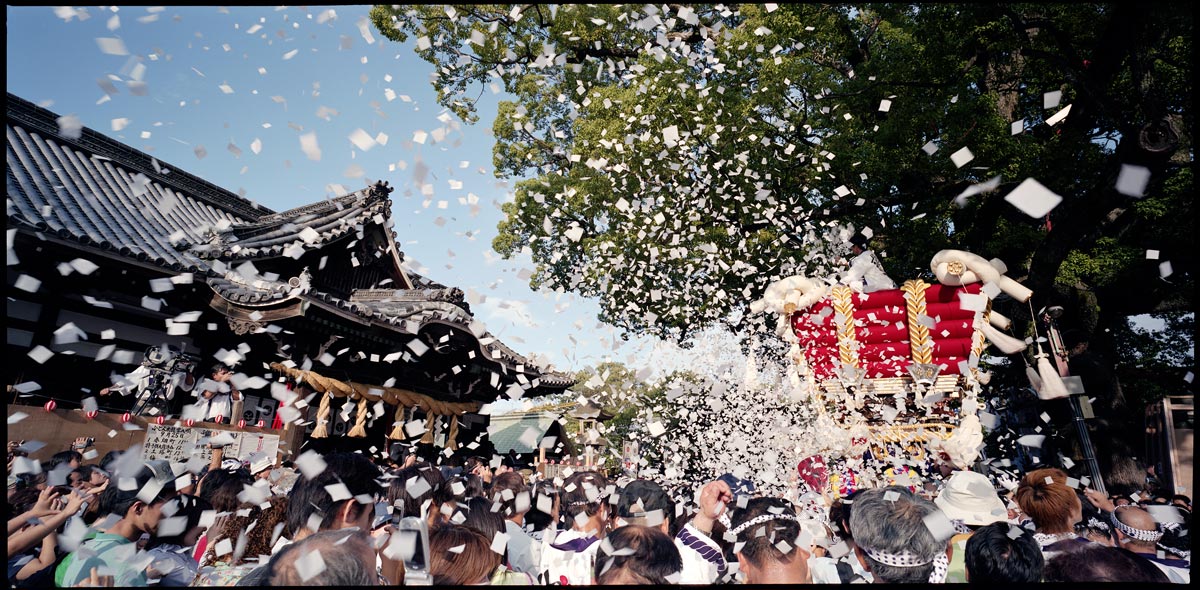 The Futon Daiko festival at Mozu Hachiman Shrine in Sakai, Japan is a lunar festival, taking place in late September or early October on the weekend closest to the full moon. Nine town participate in this event.
These festivals are a celebration of community. A hundred or more people are need to carry these floats and far more in the community are needed to support the event. The bonds in these communities are strong and the festival maintains and strengthens them. Click on the image for a larger view.

Kumadanaji, Temple 8—Shikoku Pilgrimage
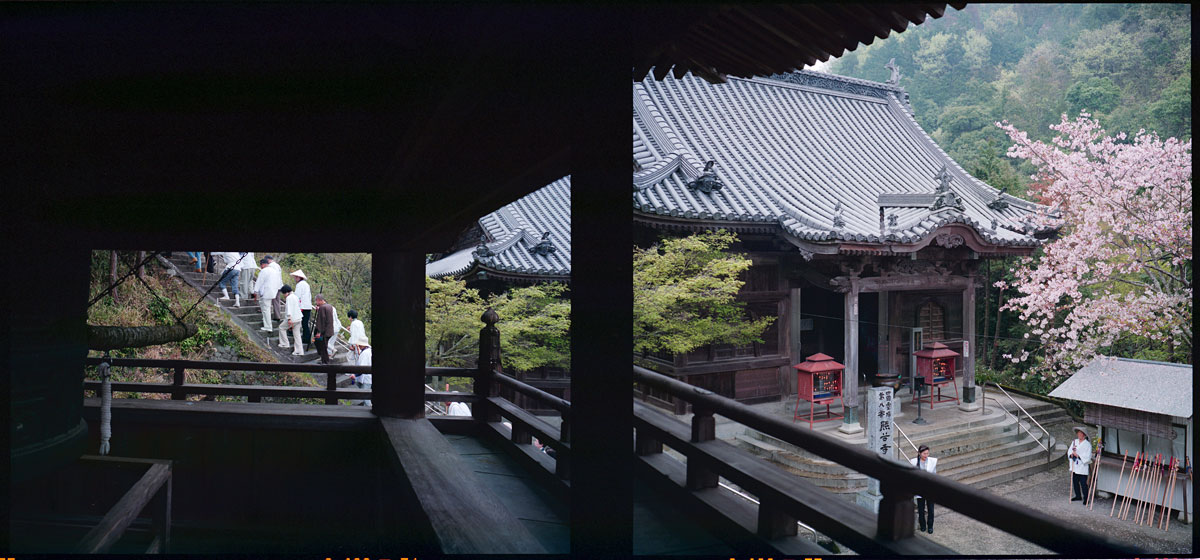 Kumadanaji, Bear Valley Temple, is not a scary as it sounds. Tucked in the end of a small valley, it is a peaceful place. This temple has one of the most impressive compounds on the pilgrimage. The main hall can be seen on the right and the steps on the left lead to the Daishi hall. We climbed the bell tower to ring the temple bell—two good friends, both pilgrims before us, had taken shelter at this temple and were the inspiration for our pilgrimage.
At Kumadanaji, Kobo Daishi is said to have had a vision of the Shinto god of Kumano, who bestowed upon him a small statue of Kannon Bosatsu (Avalokitešvara). Kobo Daishi carved the temple’s main image of Senju Kannon (Avalokitešvara of a thousand hands) to enshine it. Click on the image for a larger view.
Breaking Storm
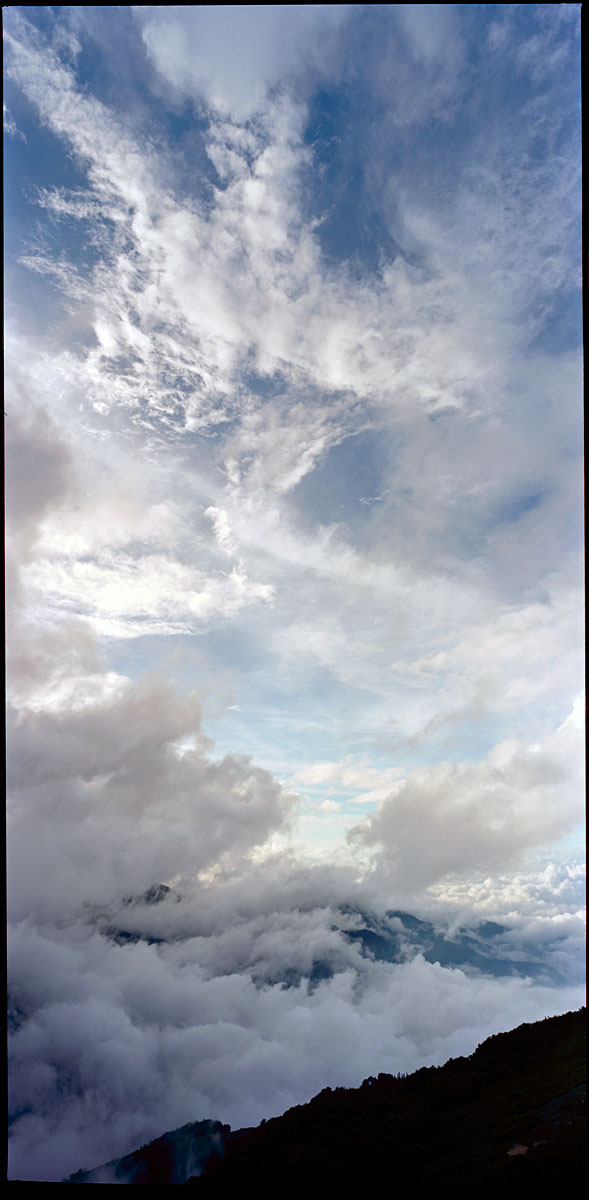 Storm breaking over the North Alps in Japan. The Sea of Japan is under cloud cover beyond the mountains. This photograph was taken in the Hakuba region at about 3,000m or 10,000ft. Click on the image for a larger view.
On the Streets of Tokyo—Shibuya
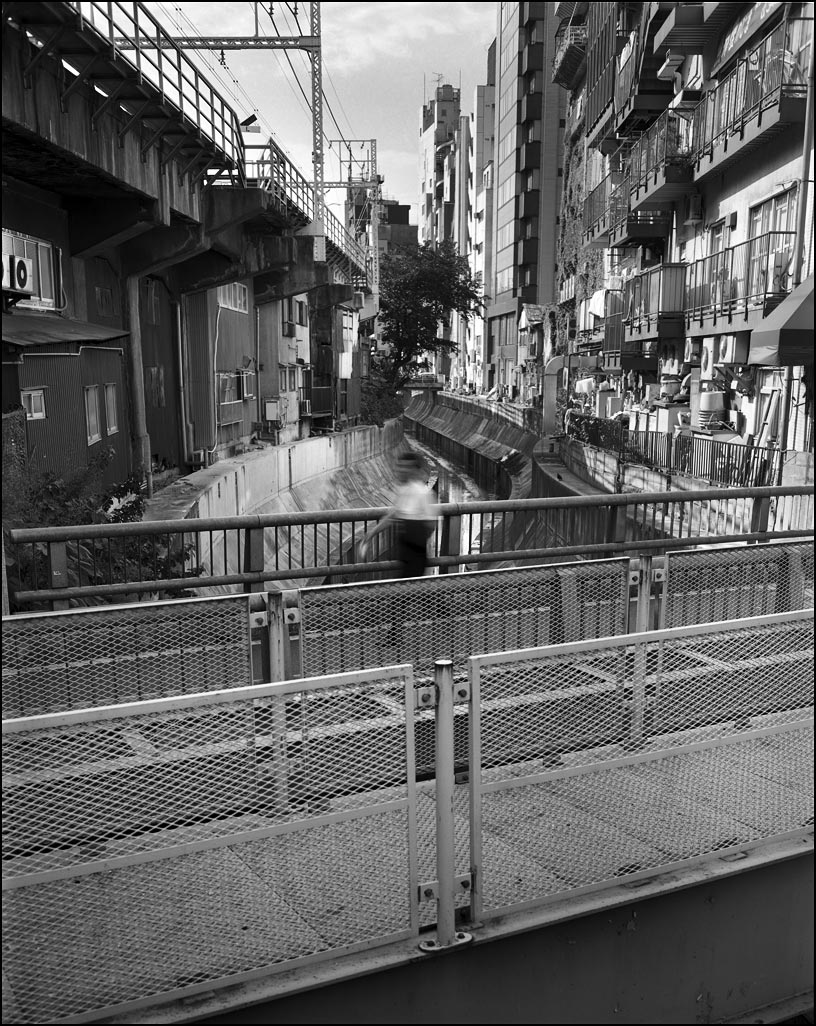 Click on image for a larger view.
The 88 Scared Places of Shikoku Pilgrimage
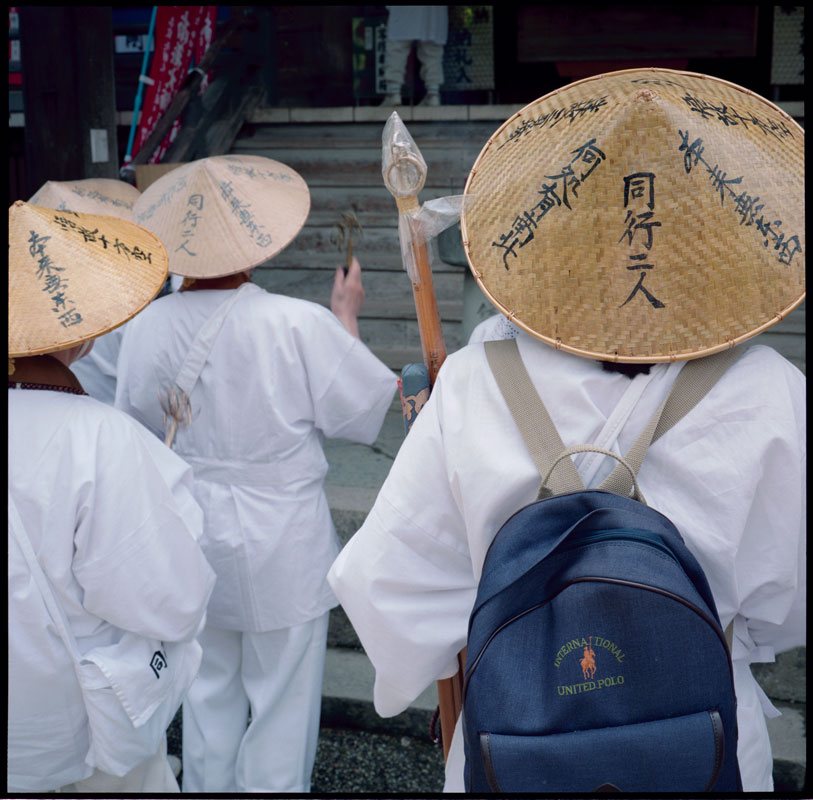 The 88 Scared Places of Shikoku Pilgrimage is probably the most famous pilgrimage in Japan. The route circles the island of Shikoku and takes about 45–60 days to complete on foot, although there are other ways pilgrims choose to travel. Naomi and I had the great fortune to walk this path three times. This year we will be publishing our experience of this remarkable journey.
These pilgrims are praying at the Daishi hall of Ryõzenji, temple number one. The four characters on the back of the hat (同行二人) are the refrain of the pilgrim—Dõgyõ ninin. Simply translated it means the same journey, two people. The second person to which it refers is Kobo Daishi, the founder of Shingon Buddhism, saint, poet, calligrapher, civil engineer, and the person credited in making this pilgrimage. While the pilgrimage is nonsectarian, every pilgrim puts their faith in O-Daishi-sama, as he is known.
