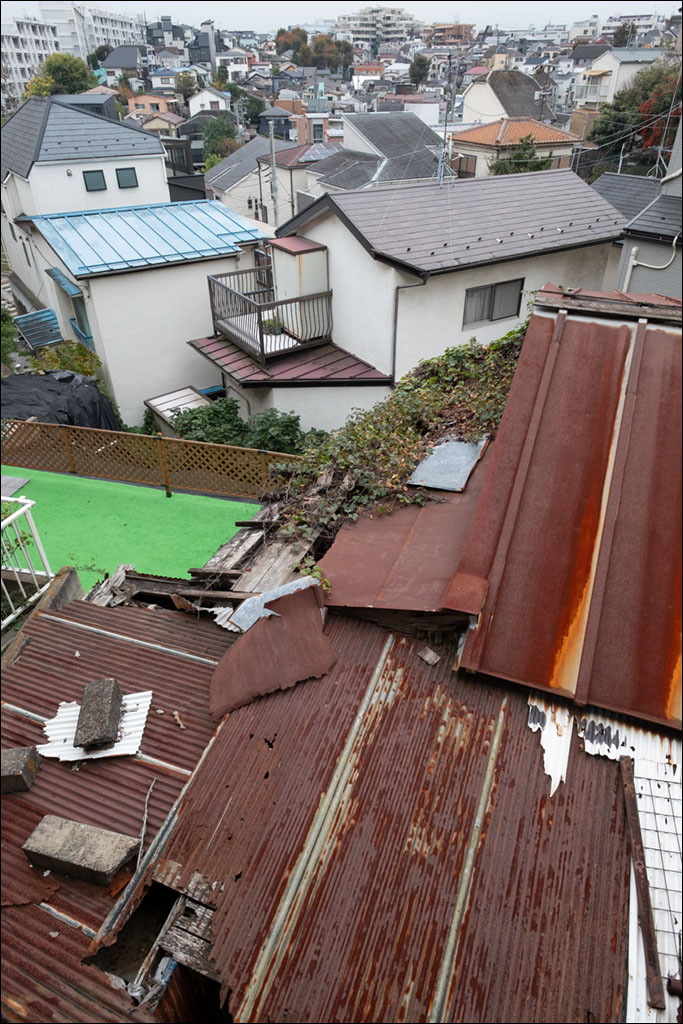
Click on the image for a larger view.

Click on the image for a larger view.
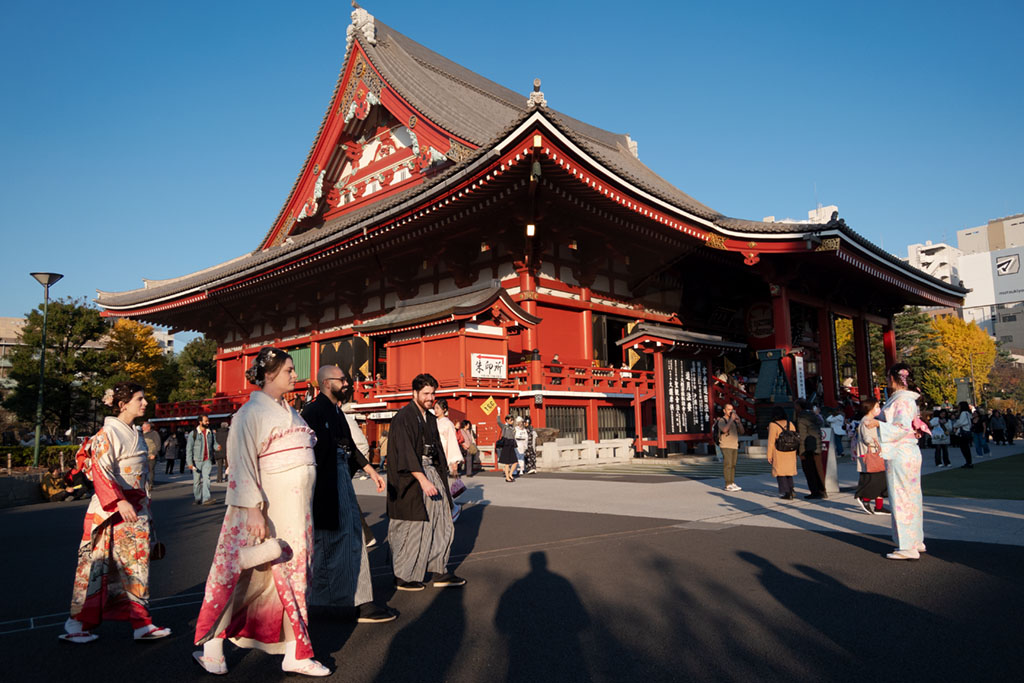
Visiting the temple Sensoji in Asakusa in Tokyo. Click on the image for a larger view.
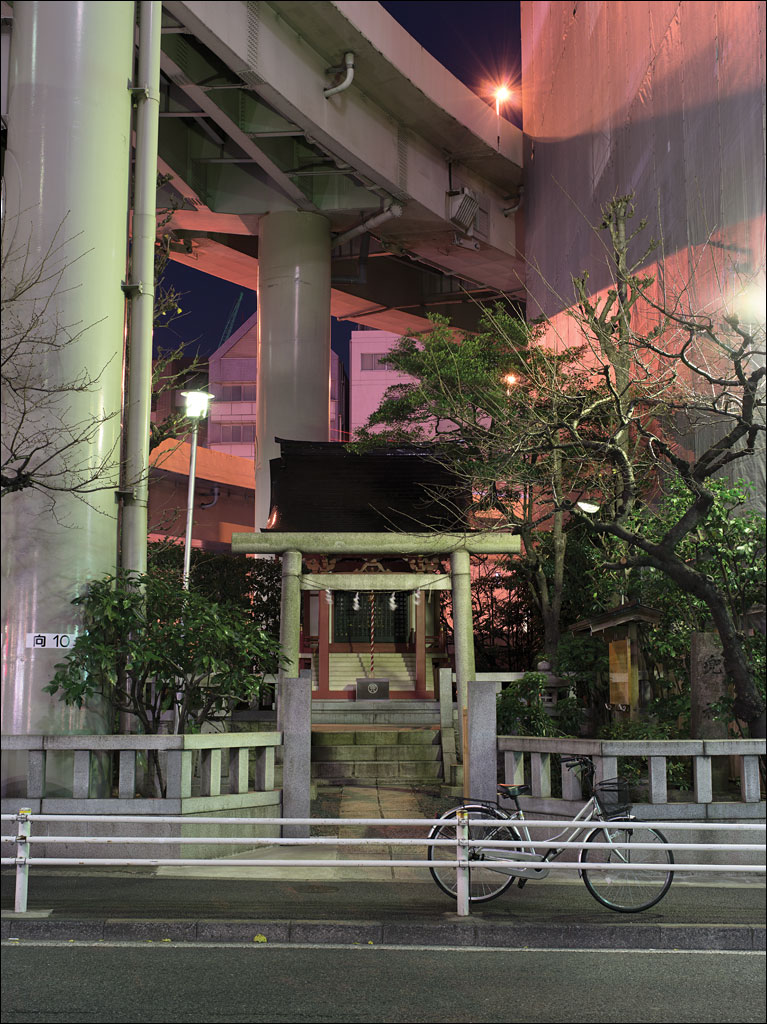 Kabuto Jinja under the Shuto Expressway, Chuo-ku, Tokyo. This shrine faces the Tokyo Stock Exchange. From the book Earth, Water, Fire, Wind, Emptiness: Tokyo Landscape. Click on the image for a larger view.
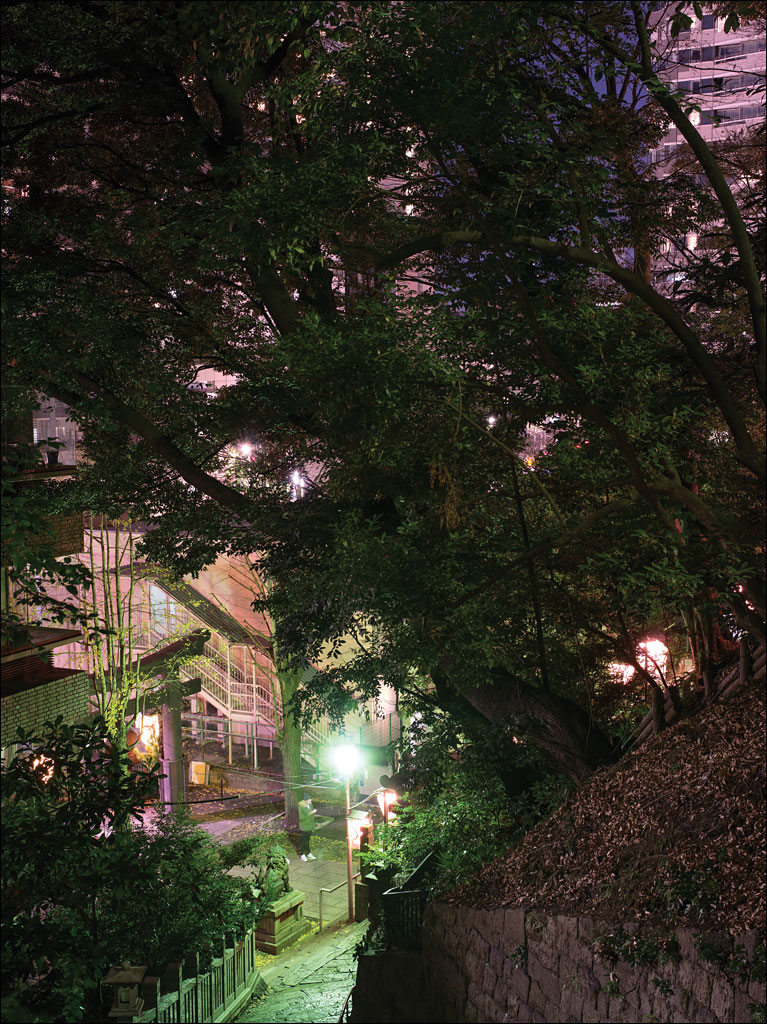 The entrance to Atago Jinja, founded in 1603, marked by the shinto Tori gate or Torii. Built on one of the highest points in Edo overlooking the bay (26 m, 85 ft.), the shrine was famous for its views. Today, that view is obscured by buildings. The fire god Homusubi-no-mikoto is the main deity, reflecting how deadly and feared fires were to the Edo population. From the book Earth, Water, Fire, Wind, Emptiness: Tokyo Landscapes. Click on the image for a larger view.
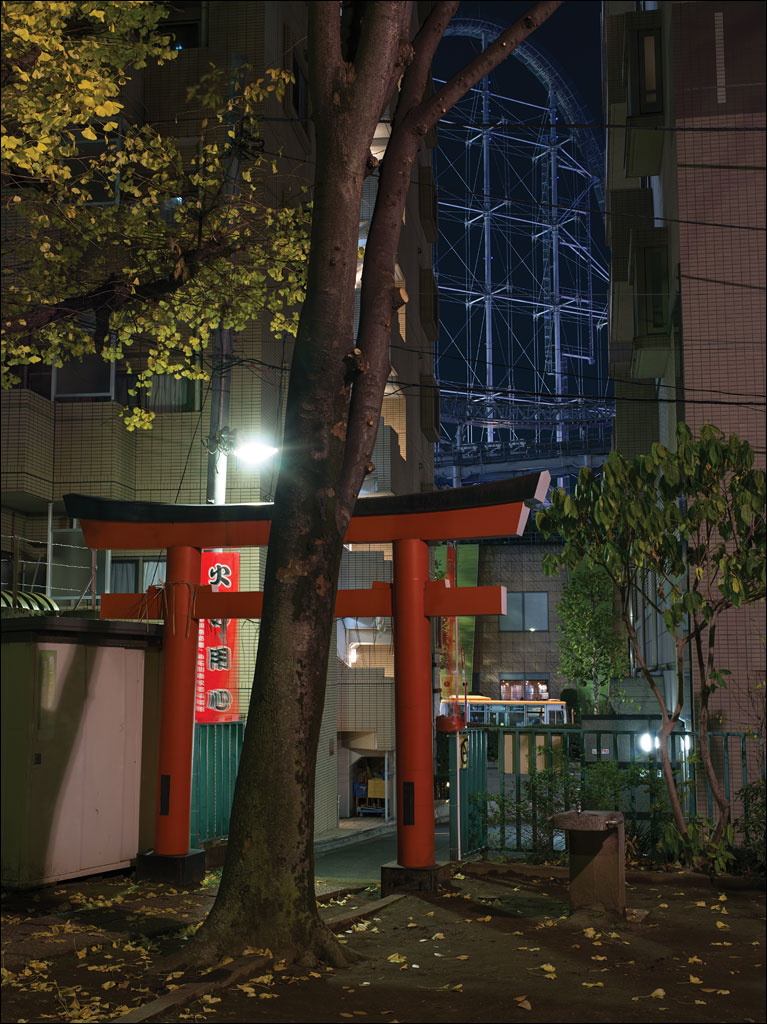 Shusse Inari Jinja, Bunkyo-ku, Tokyo. The shrine was founded in 1620 by Lady Kasuga, a powerful woman in the Tokugawa Shogunate. The sound that periodically sweeps through the shrine is a cross between wind and thunder—the noise of the Thunder Dolphin roller coaster, the structure in the background, as the cars pass the gap between the buildings. From the book Earth, Water, Fire, Wind, Emptiness: Tokyo Landscapes. Click on the image for a larger view.
 Discarded scales in Tsukiji fish market in Tokyo. From our book Tsukiji: Tokyo Fish Market Suite. Click on the image for a larger view.
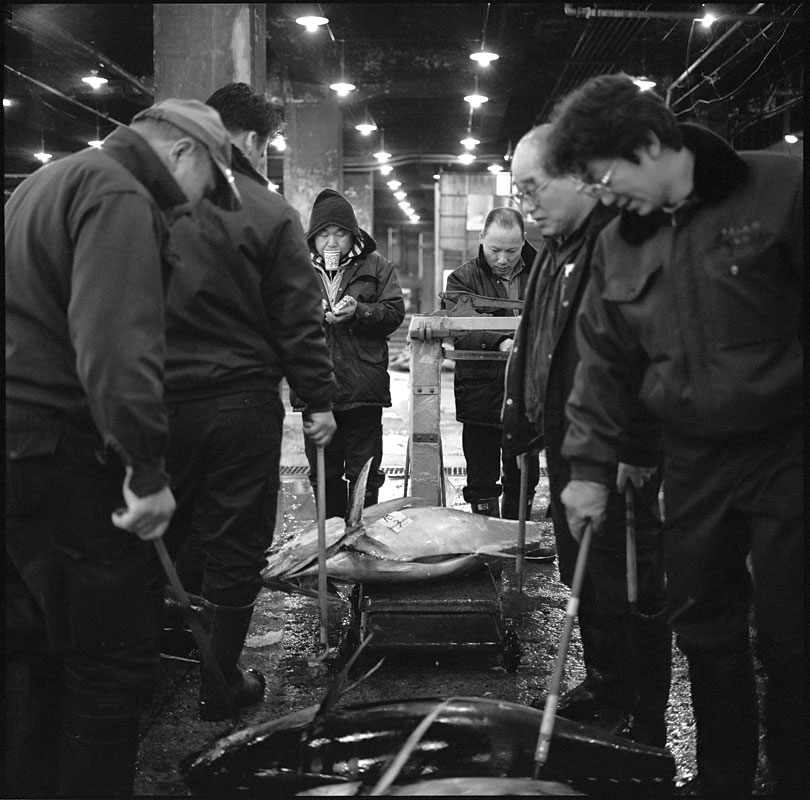 The former Tokyo Central Wholesale Fish Market in Tsukiji. From our book Tsukiji: Tokyo Fish Market Suite. Click on the image for a larger view.
 The former Tokyo Central Wholesale Fish Market in Tsukiji. The market was known for its trade in tuna. From our book Tsukiji: Tokyo Fish Market Suite. Click on the image for a larger view.
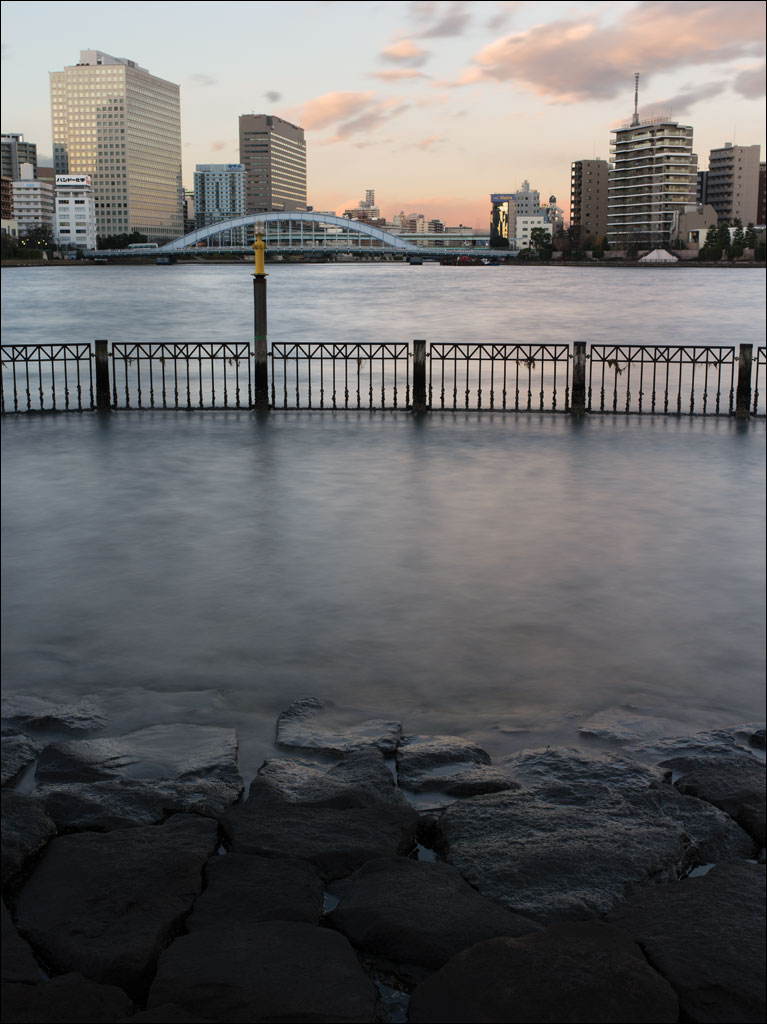 Ishikawajima Park at the tip of Tsukishima, an island made in 1892 from material dredged for a shipping channel in Tokyo bay. From our book Earth, Water Fire, Wind, Emptiness: Tokyo Landscape. Click on the image for a larger view.
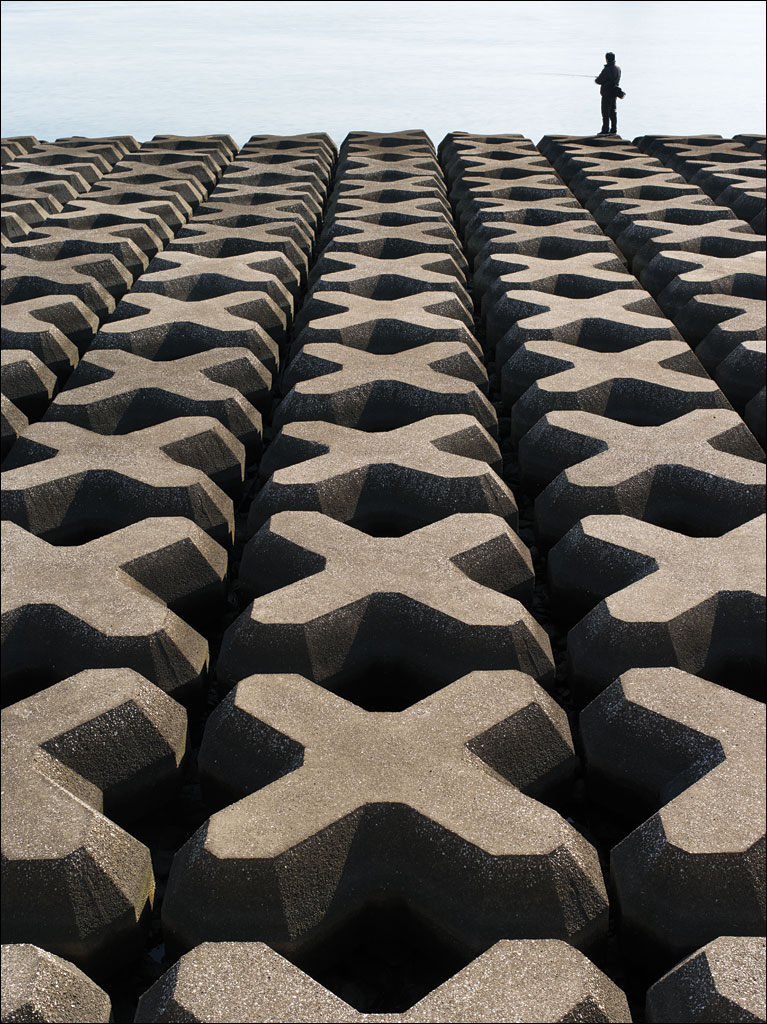 The defense along the artificial islands in Tokyo Bay. From our book Earth, Water, Fire, Wind, Emptiness: Tokyo Landscape. Click on the image for a larger view.
