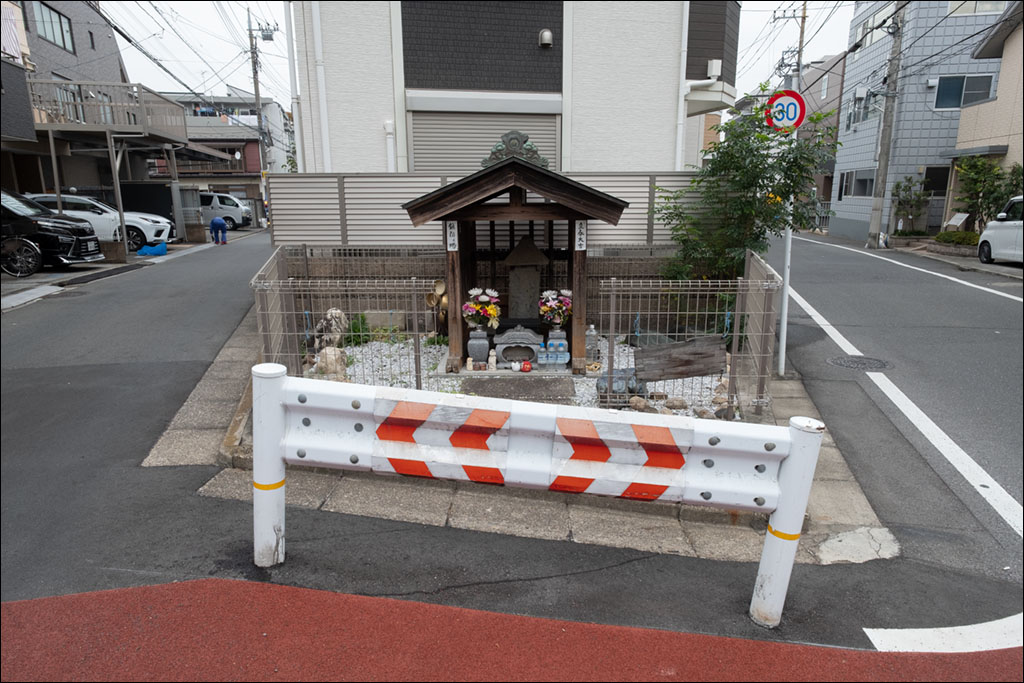
Click on the image for a larger view.
Click on the image for a larger view.
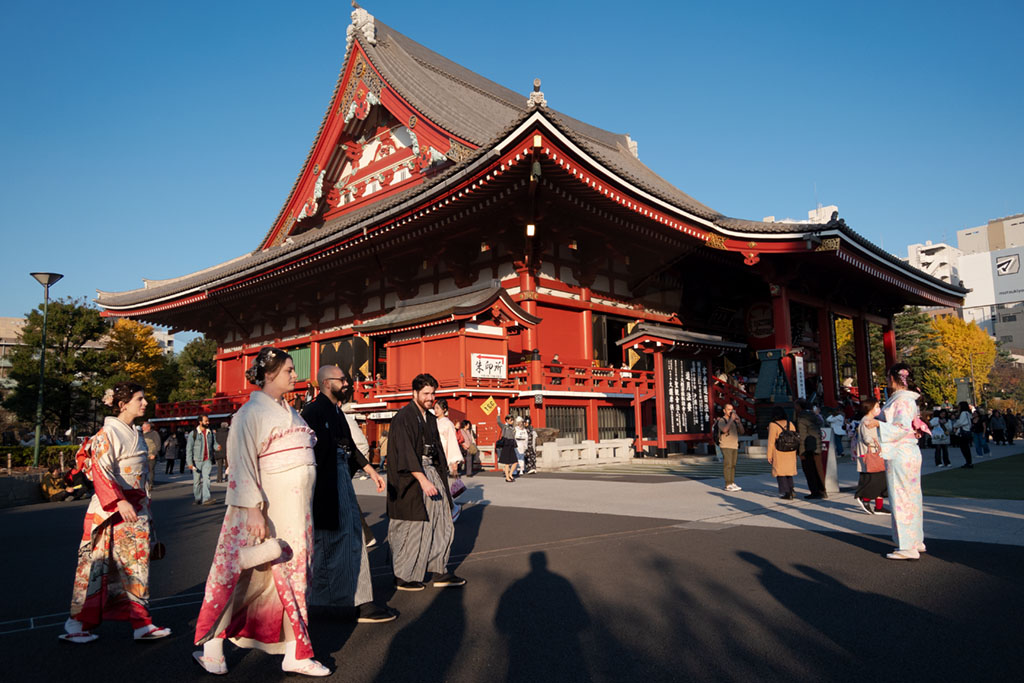
Visiting the temple Sensoji in Asakusa in Tokyo. Click on the image for a larger view.
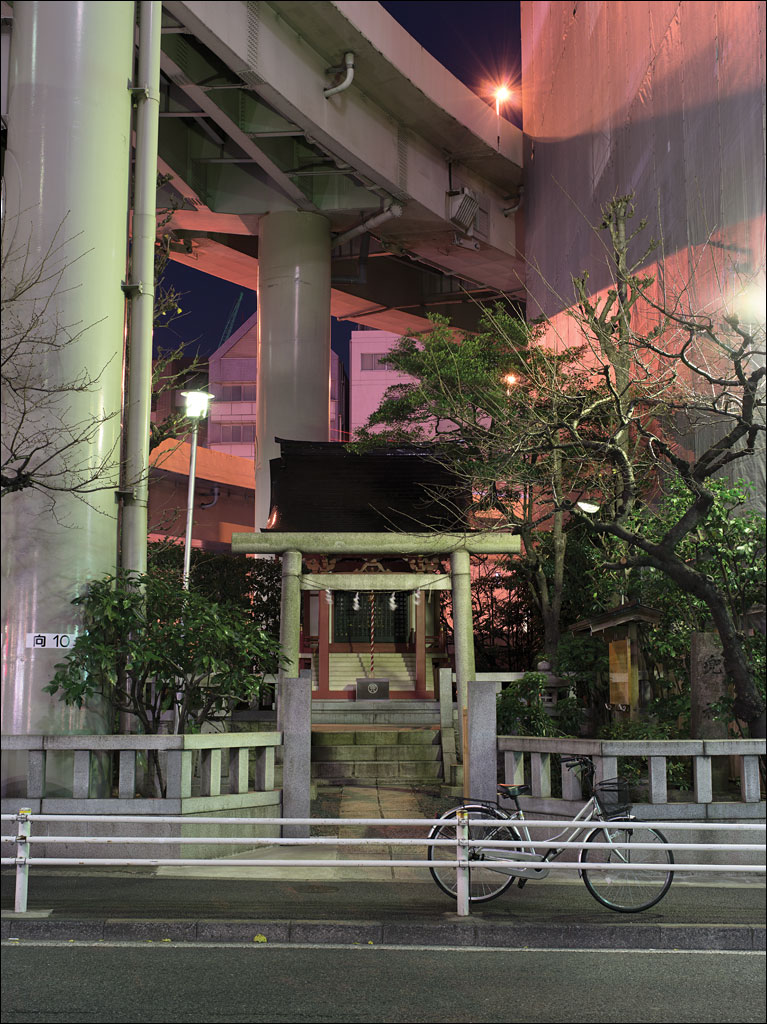 Kabuto Jinja under the Shuto Expressway, Chuo-ku, Tokyo. This shrine faces the Tokyo Stock Exchange. From the book Earth, Water, Fire, Wind, Emptiness: Tokyo Landscape. Click on the image for a larger view.
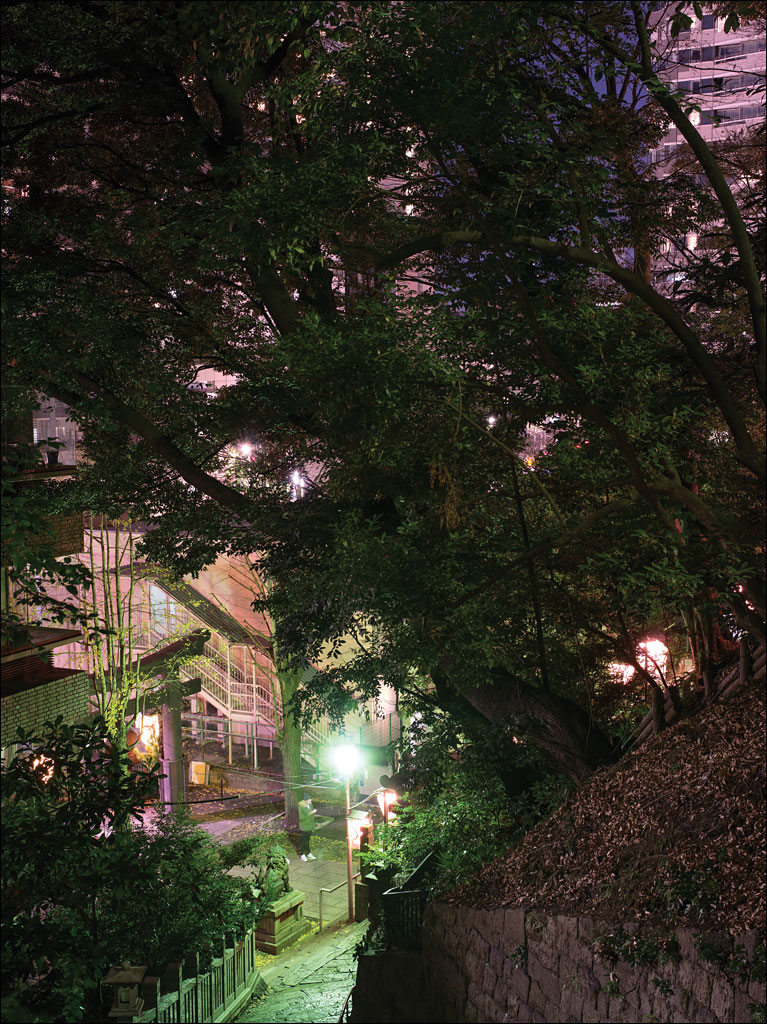 The entrance to Atago Jinja, founded in 1603, marked by the shinto Tori gate or Torii. Built on one of the highest points in Edo overlooking the bay (26 m, 85 ft.), the shrine was famous for its views. Today, that view is obscured by buildings. The fire god Homusubi-no-mikoto is the main deity, reflecting how deadly and feared fires were to the Edo population. From the book Earth, Water, Fire, Wind, Emptiness: Tokyo Landscapes. Click on the image for a larger view.
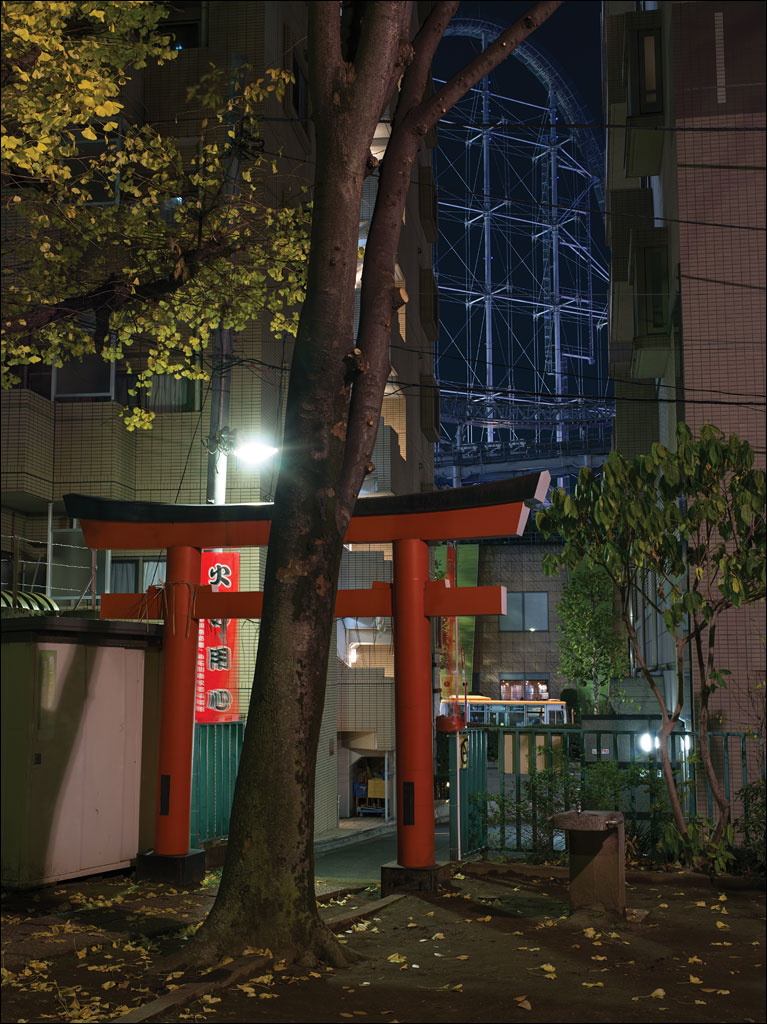 Shusse Inari Jinja, Bunkyo-ku, Tokyo. The shrine was founded in 1620 by Lady Kasuga, a powerful woman in the Tokugawa Shogunate. The sound that periodically sweeps through the shrine is a cross between wind and thunder—the noise of the Thunder Dolphin roller coaster, the structure in the background, as the cars pass the gap between the buildings. From the book Earth, Water, Fire, Wind, Emptiness: Tokyo Landscapes. Click on the image for a larger view.
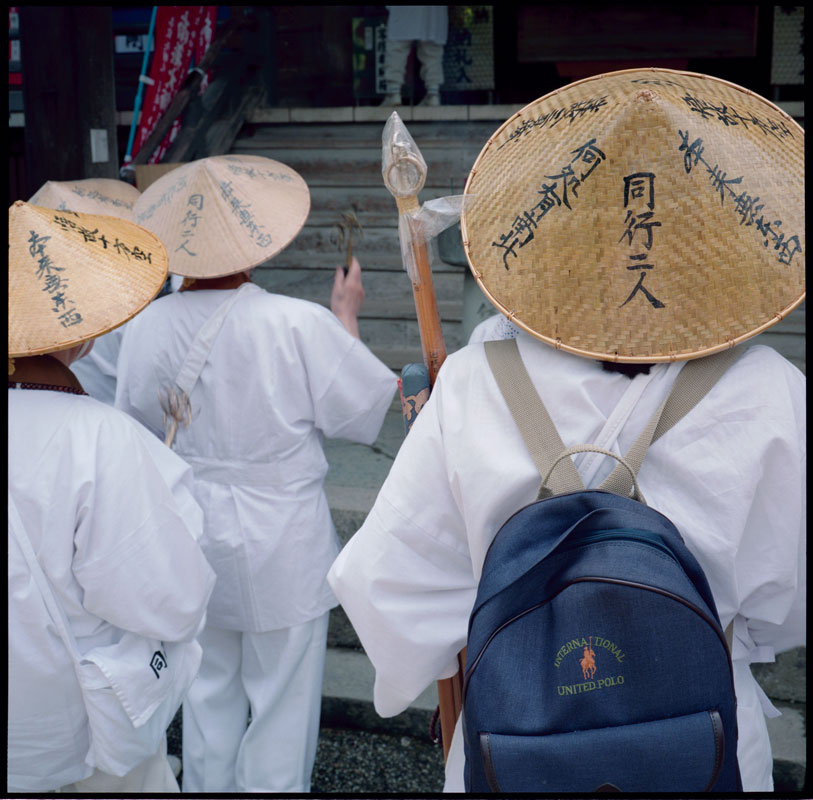 Naomi and I will be speaking at this year’s Kansas City Japan Festival. We will be giving a one-hour presentation on our experience of the 88 Sacred Places of Shikoku Pilgrimage, a 700-mile walking pilgrimage around the island of Shikoku in Japan. Our presentation is at 1 pm in the recital hall, but events are planned for the entire day.
The festival is on October 5th at the Johnson County Community College and sponsored by the Heart of America Japan-America Society. More can be found on the festival website.
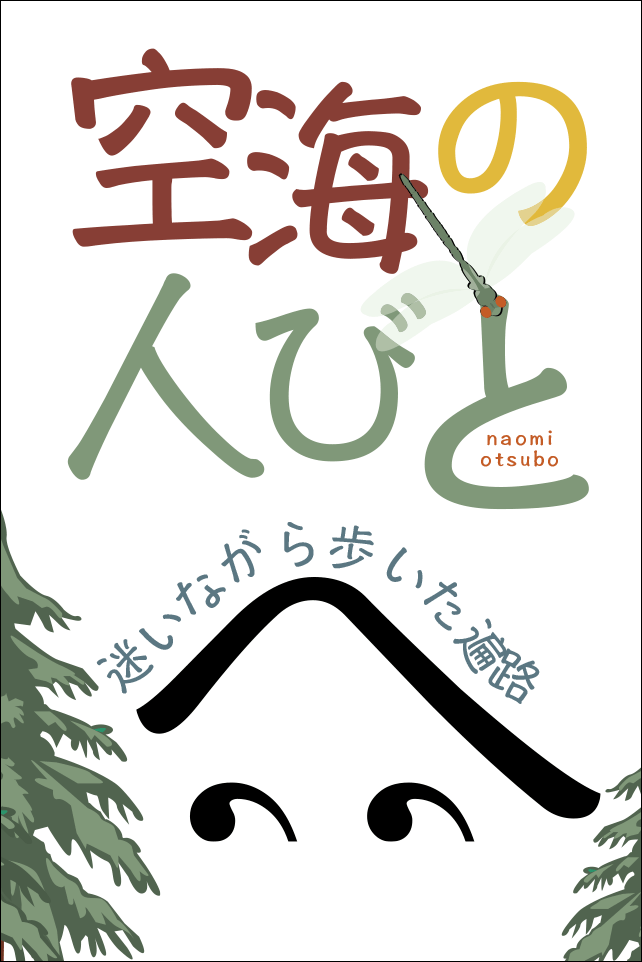 Naomi and I are pleased to announce an upcoming publication: Kukai no Hitobito. This is Naomi’s memoir of her experience as a pilgrim to the Eighty-Eight Sacred Places of Shikoku Pilgrimage in Japan. The text is in Japanese and will be available to purchase in October.
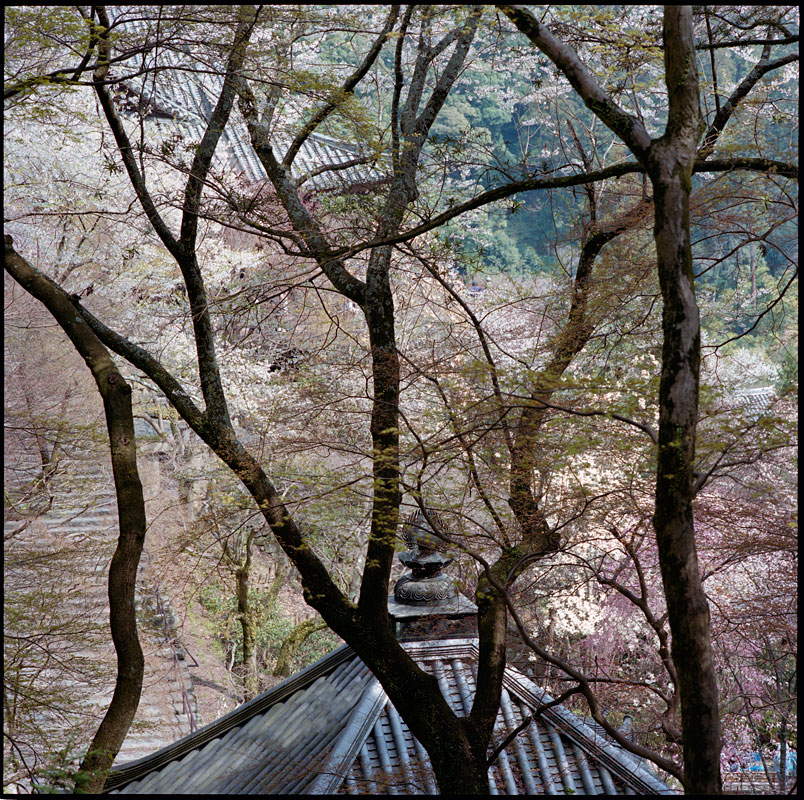 Tucked in along the walls of a valley just south of Nara is the Buddhist temple Hase-dera. The Japanese visit in the spring to see the cherry, plum, and magnolia in blossom. The compound is huge with over thirty buildings. Long flights of stone steps help you traverse the topography. Despite the size, Hase-dera has cultivated a landscape where it is difficult to separate the artificial from the natural. Click on the image for a larger view.
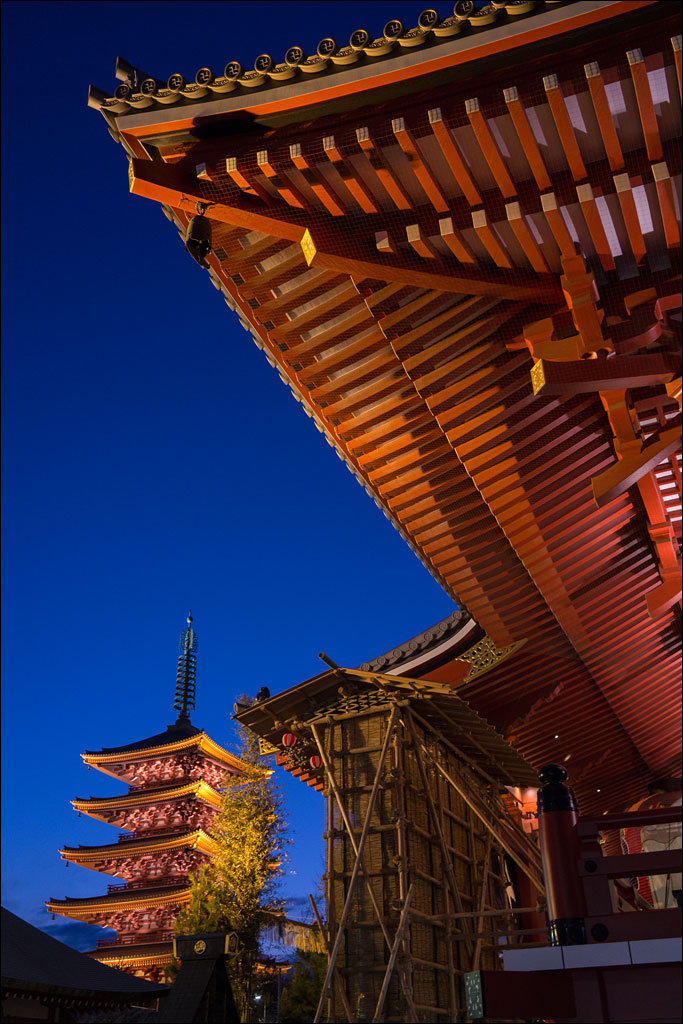 New years in Japan is a rich event. Millions of Japanese visit shrines and temples. One of the largest temples in Tokyo and one of the busiest is Senso-ji in Asakusa. This temple is famous for its gate. What it is little known for is one of the shortest rituals of the new year celebration, moja-okuri. Click on the image for a larger view.
