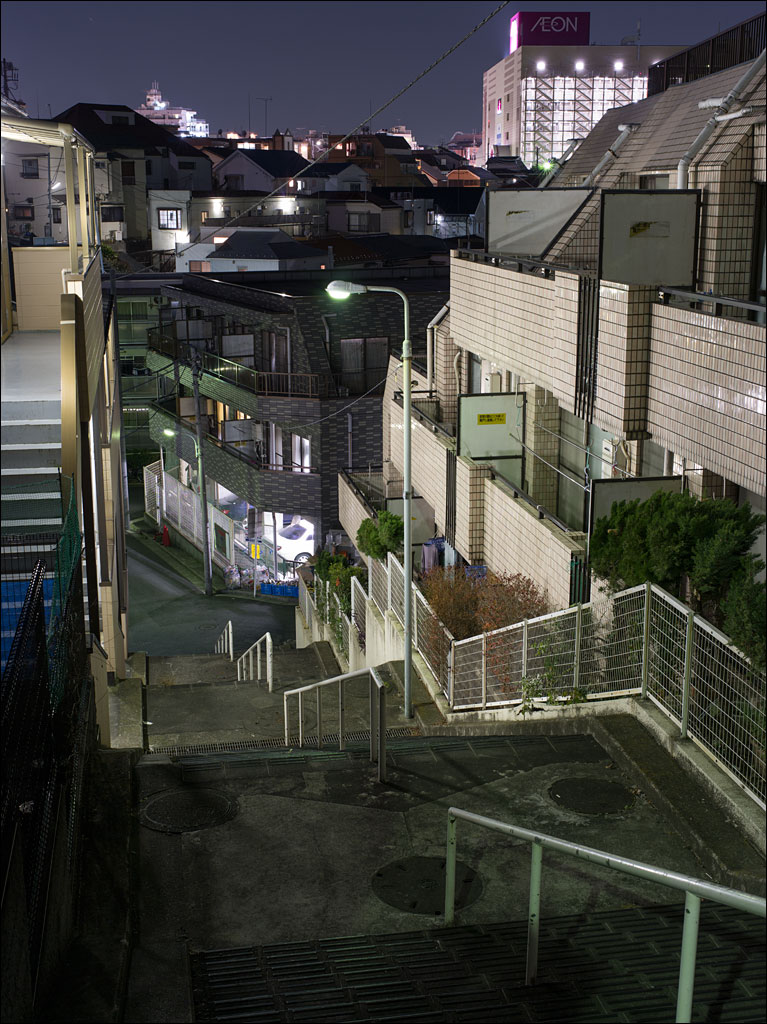
 Tokyo neighborhoods are packed. The average single-family residence in Tokyo is 68m² or 732ft². Itabashi-ku, where this image was taken, has a population density of 16,924 people per square kilometer or 43,837 people per square mile. Itabashi-ku is at the edge of the metropolitan area. Click on the image for a larger view.
Tag Archives: Tokyo Landscapes
Chuo Bohatei—Reclaiming Land
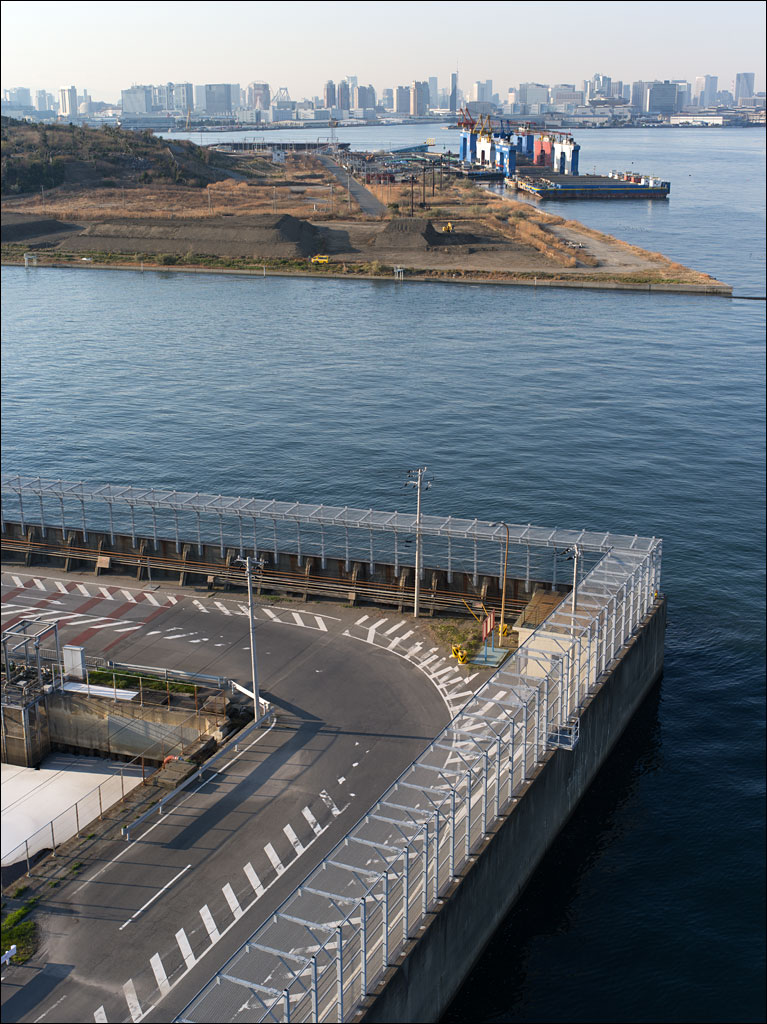 Chou Bohatei or Central Breakwater Island is the largest landfill in Tokyo bay. It is expected to cover 989 hectare or 2,444 acres when complete. About half a million tons of rubble from the Tohoku Tsunami disaster was deposited at this site.
A number of events at the 2020 Tokyo Olympics are expected to take place here—cycling will be on the outer landfill, the island in the foreground, rowing and kayaking in the channel, and equestrian events on the inner landfill on the other side of the channel. The hill on the inner landfill is part of the Sea Forest Park which will host the events.
At the horizon is the reclaimed land of Odaiba and the mainland of Tokyo. Since Tokyo has been extending into the bay, over 250km² or 100mi² of land has been created. Almost everything in the image is or is on reclaimed land. Click on the image for a larger view.
Nihonbashi—the Bridge of Japan
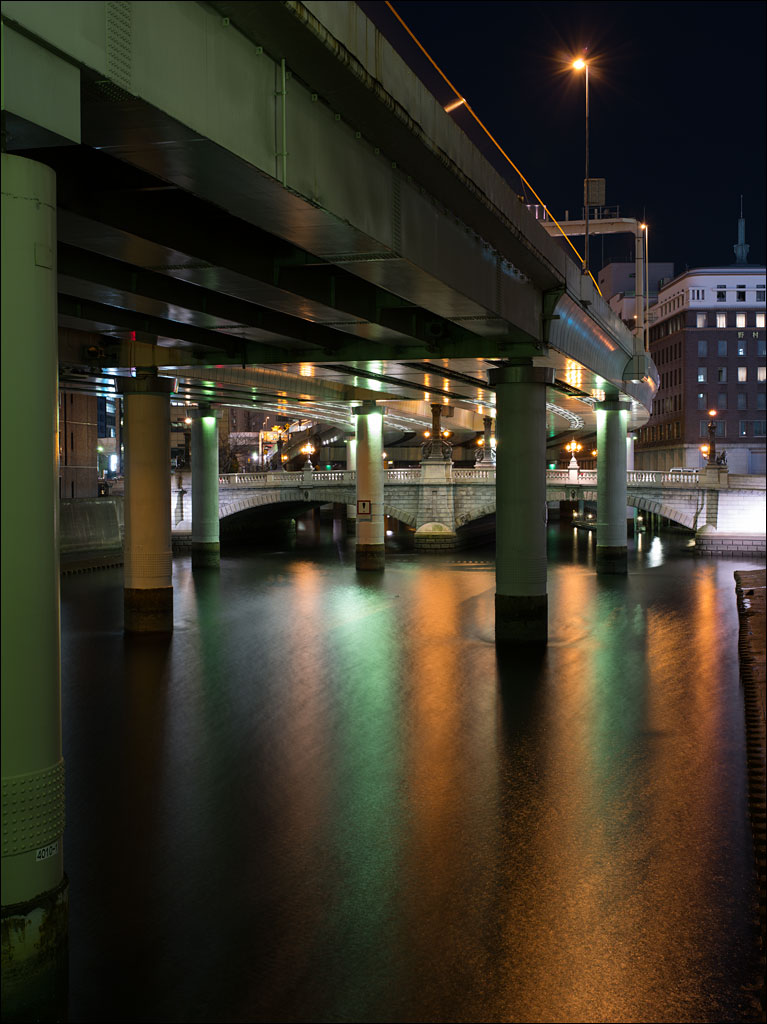 Nihonbashi, the bridge of Japan, is unceremoniously nestled under a highway built in 1964 for the Tokyo olympic games. But the bridge had a greater symbolic role in the nation. When Ieyasu Tokugawa made Edo as the capital of his new shogunate, he designated Nihonbashi as the point every road in the land would be measured from. The original bridge was built in 1603. The current structure is from 1911.
It would probably come as no surprise to anyone that the river, Nihonbashigawa, is older than the bridge. What might be a surprise is it is not that much older as it was built in the 15th century. Ota Doukan had built the first castle in the area in 1457. This waterway served as defense for the castle and a route to Tokyo bay. That castle evolved into what is now known as the Imperial Palace. Click on the image for a larger view.
Fast Food—Japanese Style
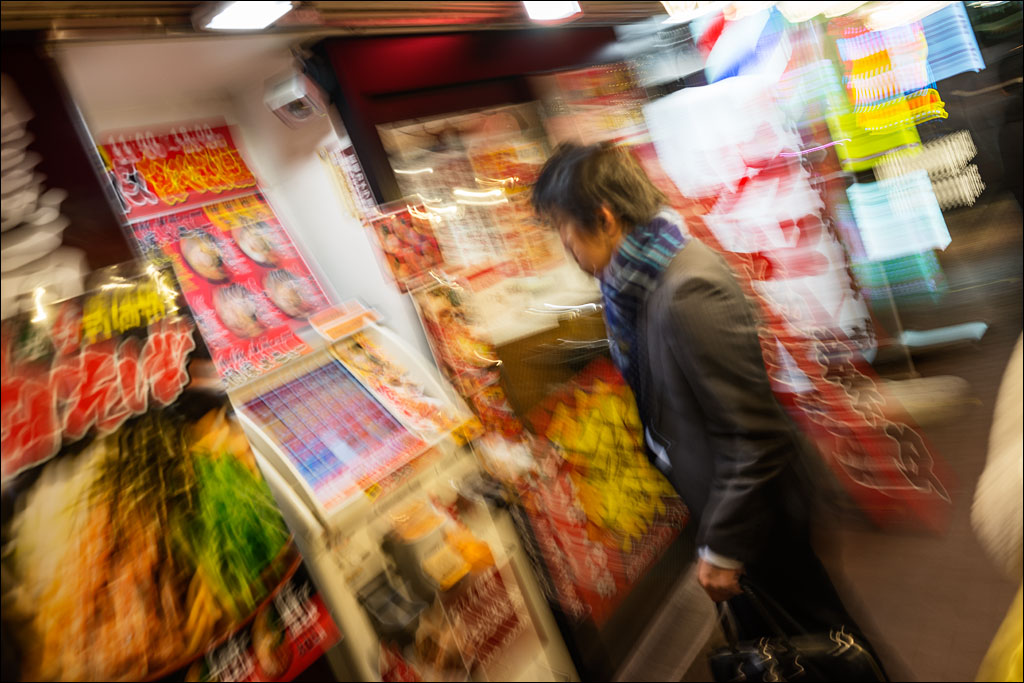 Fast food is synonymous with unhealthy food, at least in the West. In Japan, it is not so bad. For example, the last place I dropped in for a quick bite, this is what my $9 got me:
Lightly fried fish, shrimp, squid, and vegetables in batter
a bowl of white rice
a bowl of miso soup
boiled spinach
a small side of pickled vegetables
a cup of green tea at the beginning and a cup of brown tea at the end
The rice and miso soup have free refills.
OK, that is not quite right. That was about $6. I also ordered a glass for beer, which brought the total to $9.
And it is fast. Many places have a ticket machine outside where you purchase your meal. You take that in, sit at the bar, and hand it to the servers. A few minutes later you have your food. And when you finish, you just leave. Click on the image for a larger view.
Dining Out
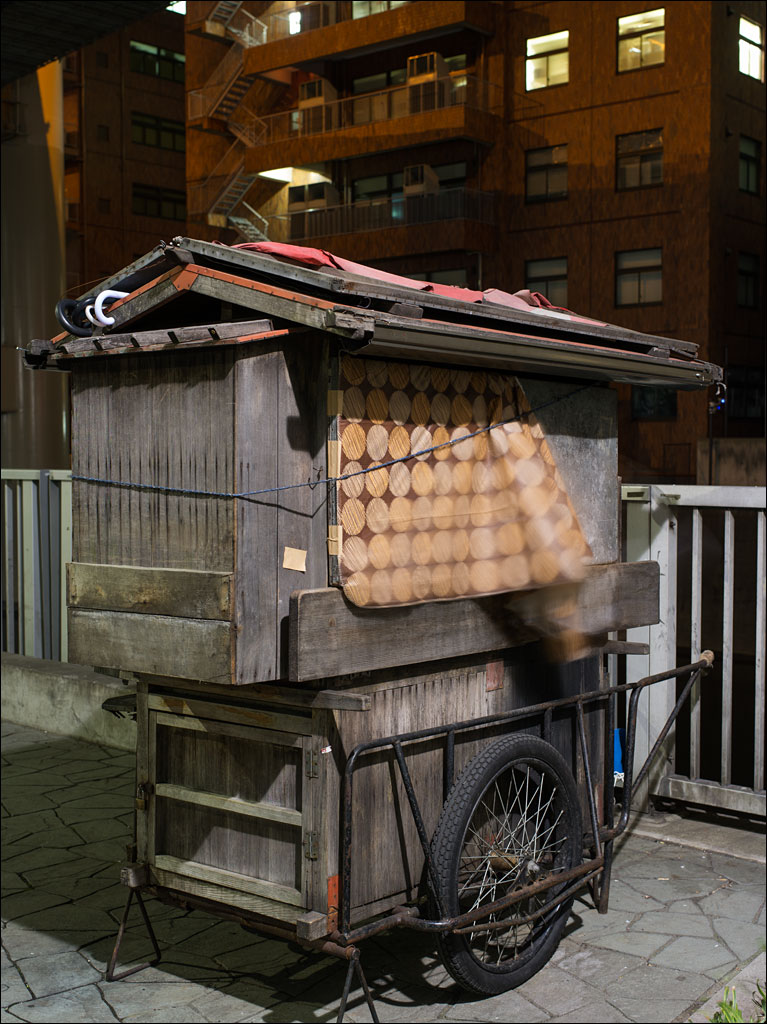 Some restaurants in Japan are portable. The roof panels fold out to protect patrons from the rain, plus a few umbrellas just in case. These places can serve Japanese noodles (ramen), grilled, skewered chicken (yakitori), or simmered meats and vegetables (oden). Click on the image for a larger view.
Come On Art
 The Tokyo bar and restaurant scene can be an odd one for the visitor. While large establishments can be found around the city, there are also small places scattered through neighborhoods, especially around train stations—this one is near Kami-Itabashi station. These bars tend to be well loved by a small clientele. They can also be surprisingly good, odd signs and confusing names not withstanding. Click on the image for a larger view.
The Tokyo Rail System
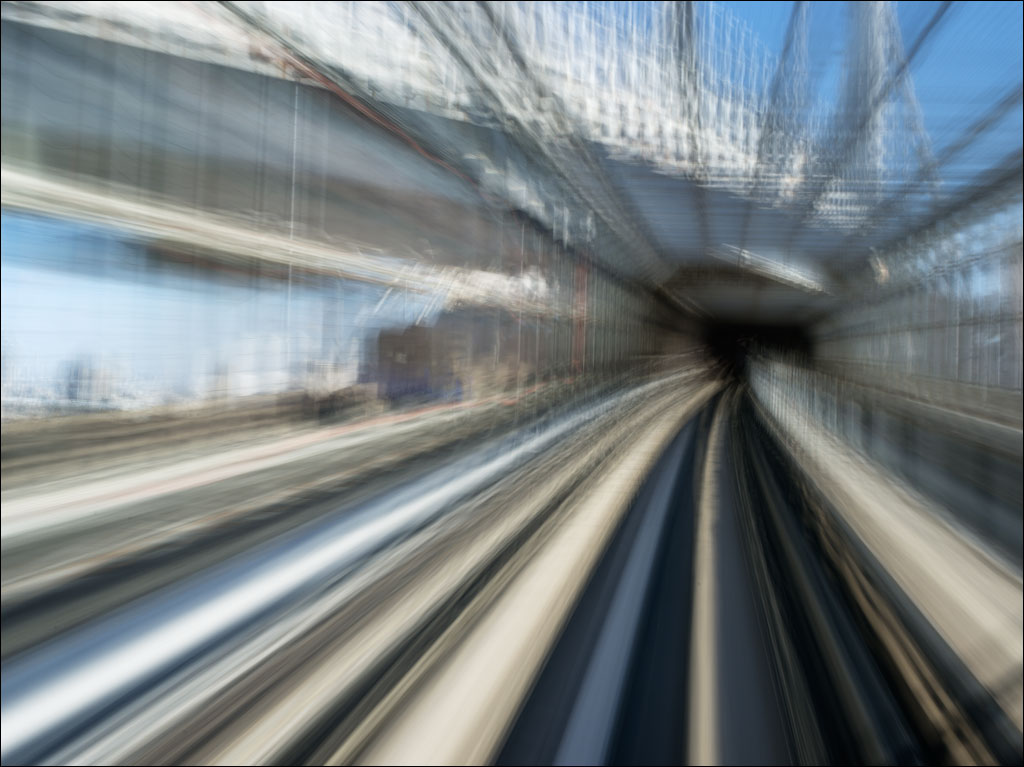 The Tokyo rail system is an amazing network. The greater Tokyo rails system, comprising of forty-eight operators, moves nearly forty million people—daily. The subway, which serves only a part of central Tokyo, moves over eight million people. To put that into context, the New York subway system moves over five million people on weekdays and Germany’s entire rail system carries ten million people each day. And the magic of this, with its 2,200 stations and nearly 3,000 miles of track (about 4,700km), the whole thing runs on time. Click on the image for a larger view.
Tokyo Bay
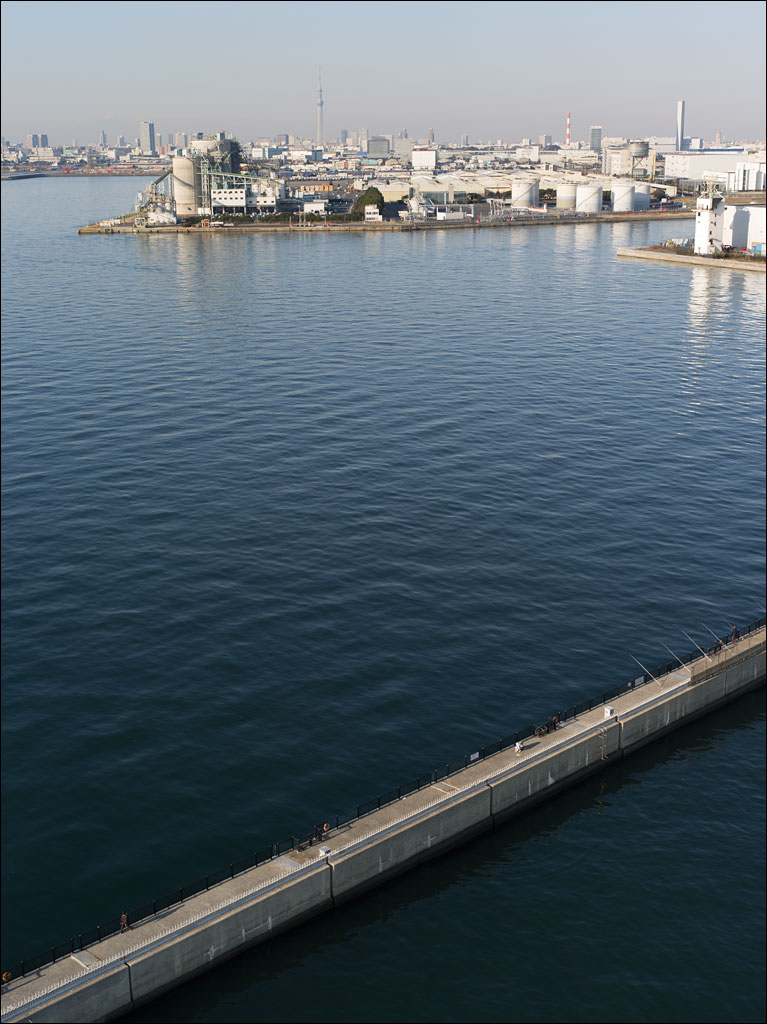 The bay area of Tokyo is a fascinating mix of industry and entertainment. Between the factories are parks and residences. Much of the land in this image is artificial; some of it old landfills for the city’s waste. What surprises me is the number of sport fishermen that use the bay. Click on the image for a larger view.
Imperial Palace, Tokyo
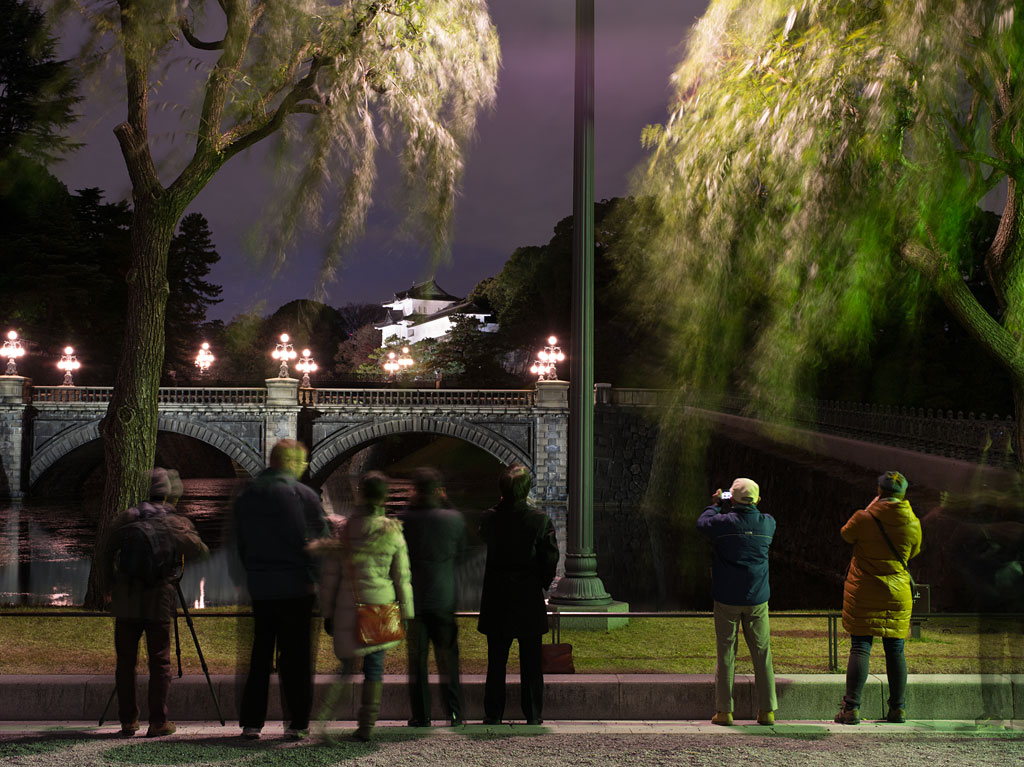 The Imperial Palace is almost a fortress to protect a forest from the dominating concrete city surrounding it. While it is home to the Japanese imperial family and the imperial household agency that supports it, much of the area is covered in trees. Seimon Ishibashi (Seimon stone bridge) and Fushimi keep mark one of the most iconic views of the palace—an entranced reserved for the imperial family and special guests. Between the emperor’s birthday on December 23rd and January 4th, the bridge is illuminated, becoming a magnet for photographers. LEDs were installed for the first time in 2014. Click on the image for a larger view.
Moonlight over Tokyo Bay
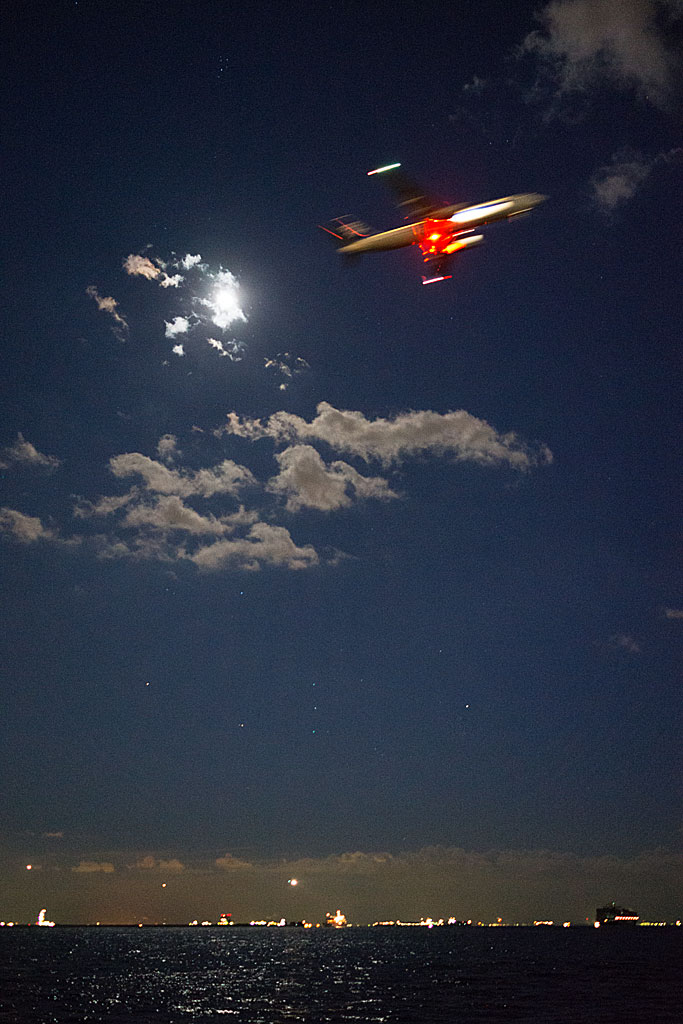 Jonanjima Seaside Park is on an artificial island in Tokyo bay. When runway B at Haneda airport is open, photographers group there to photograph the incoming planes. The lights you see on the water are ships. Just above those are aircraft lining up for their approach. The constellation Orion can be seen above the clouds on the horizon with the pleiades toward the top of the picture. Click on the image for a larger view.
