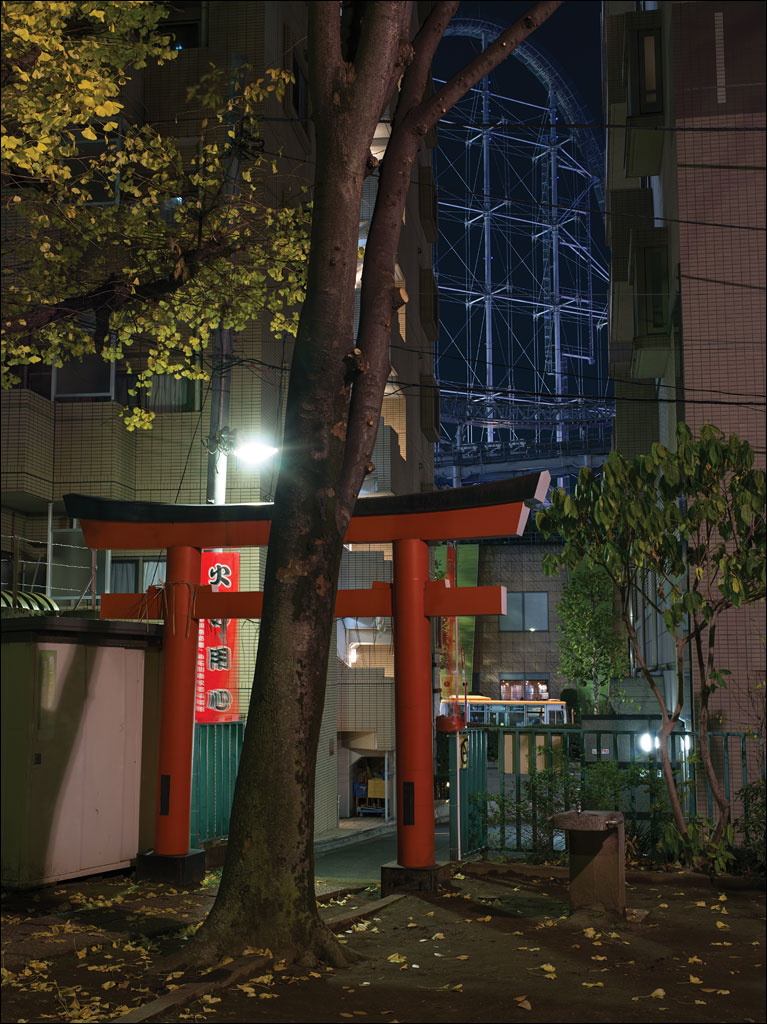
 Shusse Inari Jinja, Bunkyo-ku, Tokyo. The shrine was founded in 1620 by Lady Kasuga, a powerful woman in the Tokugawa Shogunate. The sound that periodically sweeps through the shrine is a cross between wind and thunder—the noise of the Thunder Dolphin roller coaster, the structure in the background, as the cars pass the gap between the buildings. From the book Earth, Water, Fire, Wind, Emptiness: Tokyo Landscapes. Click on the image for a larger view.
Tag Archives: Tokyo Landscapes
Sumida River
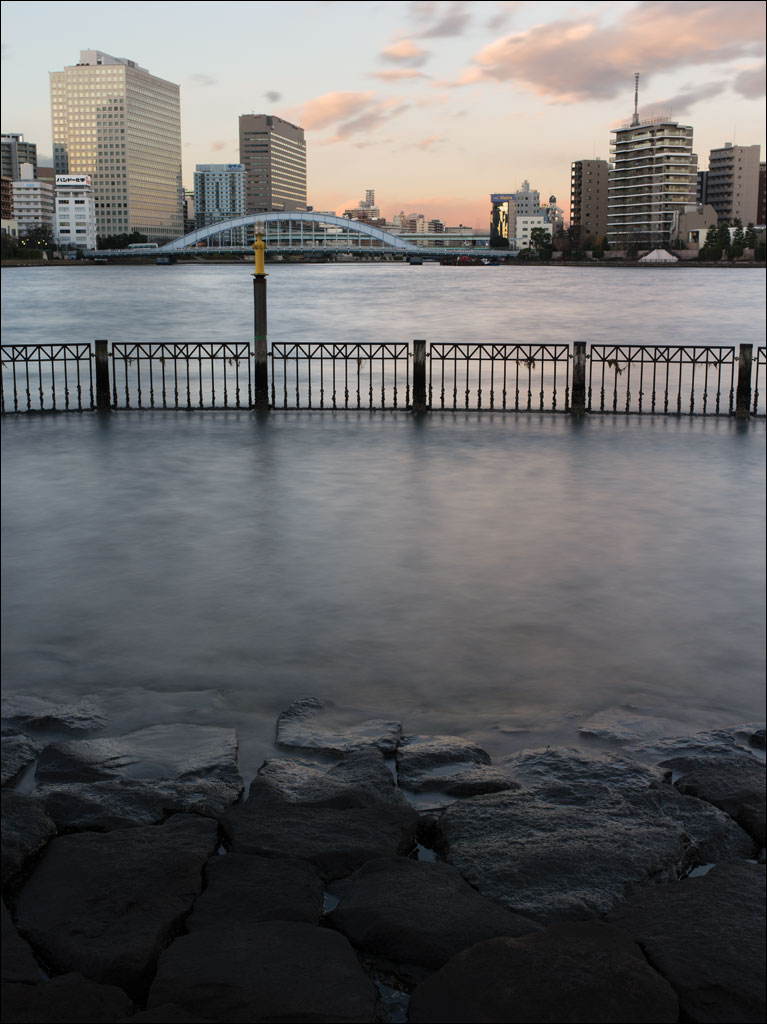 Ishikawajima Park at the tip of Tsukishima, an island made in 1892 from material dredged for a shipping channel in Tokyo bay. From our book Earth, Water Fire, Wind, Emptiness: Tokyo Landscape. Click on the image for a larger view.
Tokyo Bay Seawall
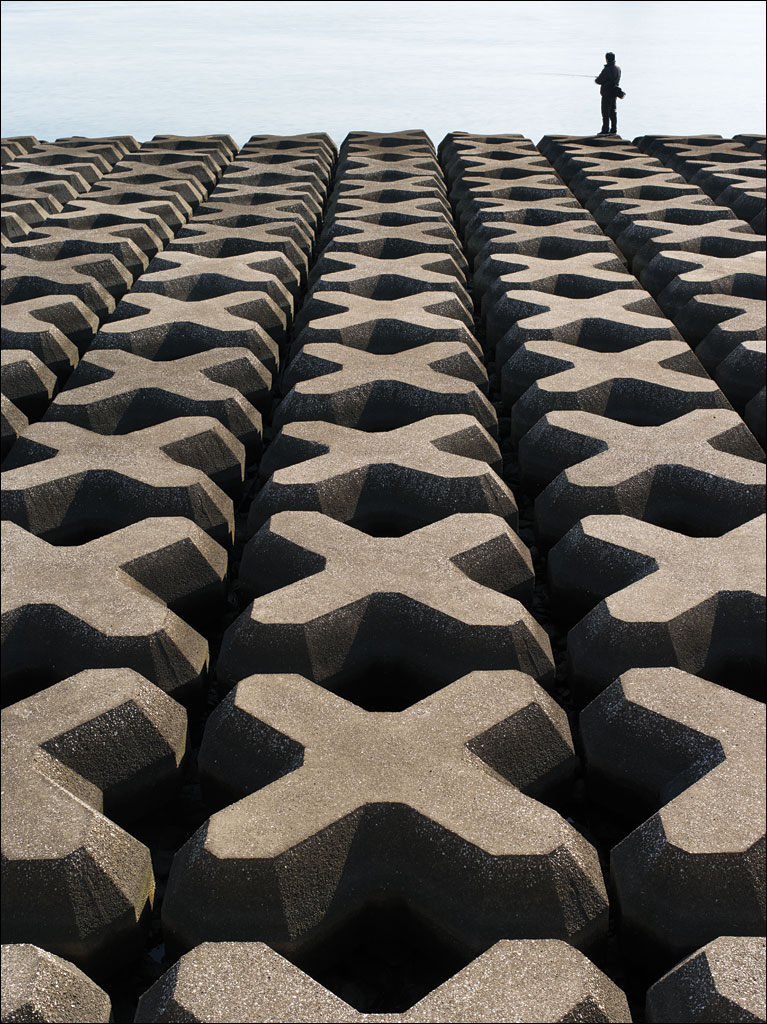 The defense along the artificial islands in Tokyo Bay. From our book Earth, Water, Fire, Wind, Emptiness: Tokyo Landscape. Click on the image for a larger view.
Shinbashi, Tokyo
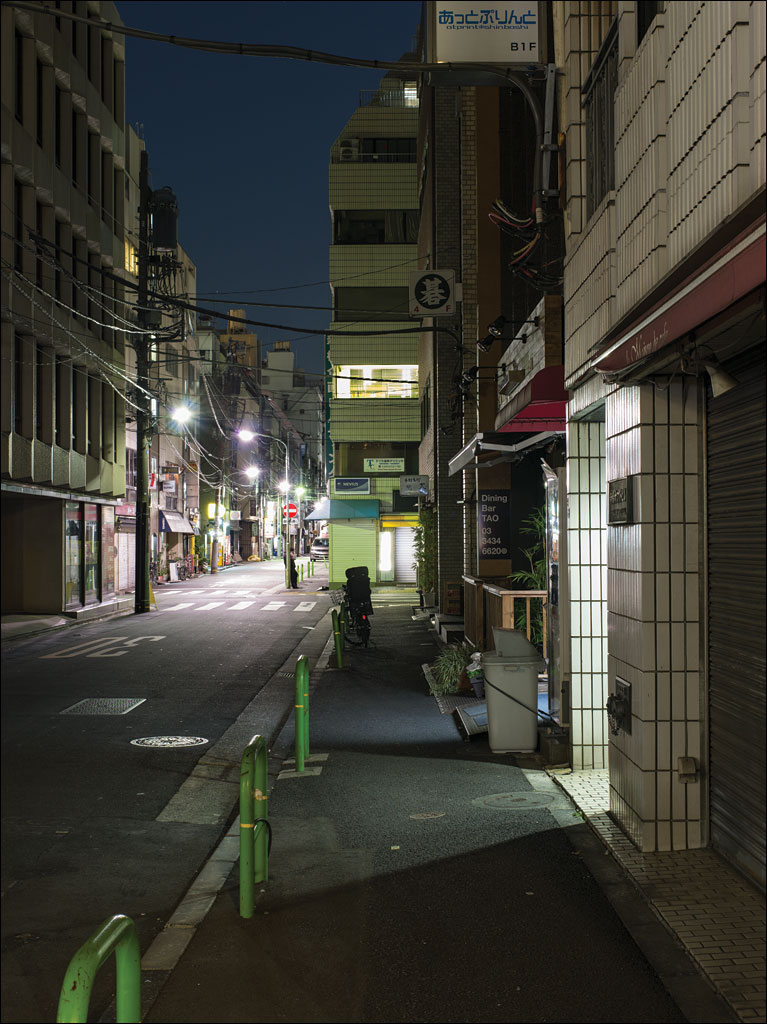 A solitary figure is standing in the usually vibrant district of Shinbashi, Tokyo. Unlike Ginza, its exclusive neighbor to the north, Shinbashi caters to the average Tokyo worker with reasonably-priced restaurants and bars. This is from our book Earth, Water, Wind, Fire, Emptiness: Tokyo Landscape. Click on the image for a larger view.
Tokyo Station
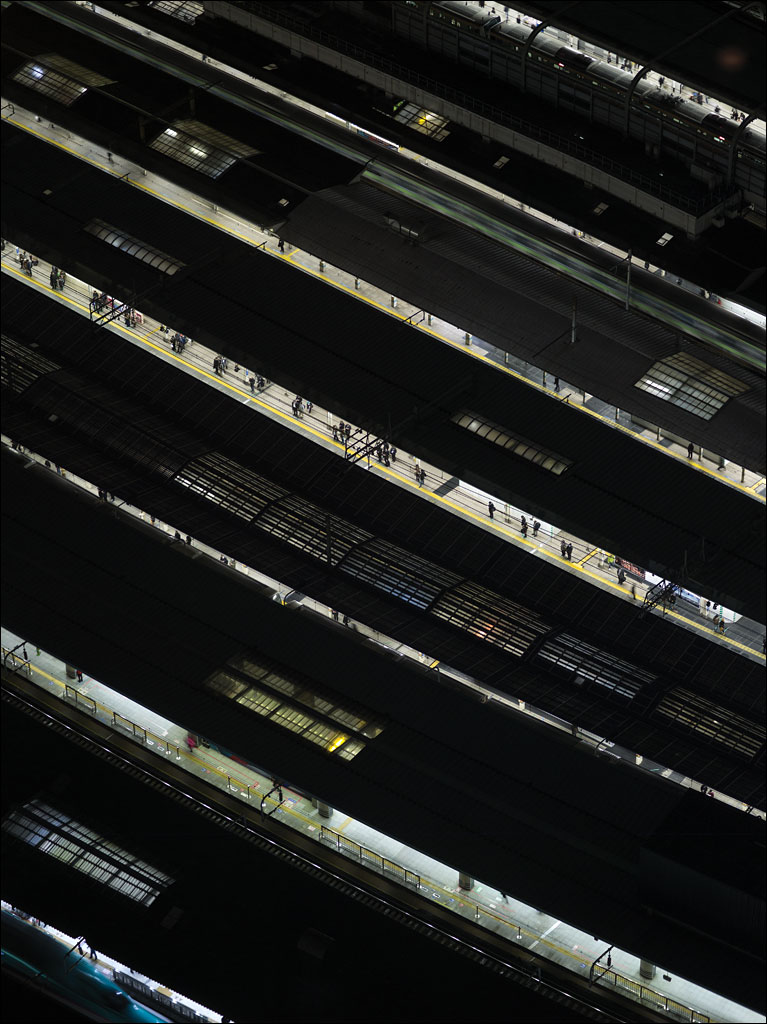 Tokyo Station at night after the rush hour. When it opened in 1914, half a million passengers used the station in the first year. Today, 420,000 people pass through daily on over 3,000 trains. This is not the busiest station in Tokyo. From our book Earth, Water, Wind, Fire, Emptiness: Tokyo Landscape. Click on the image for a larger view.
City of Lights
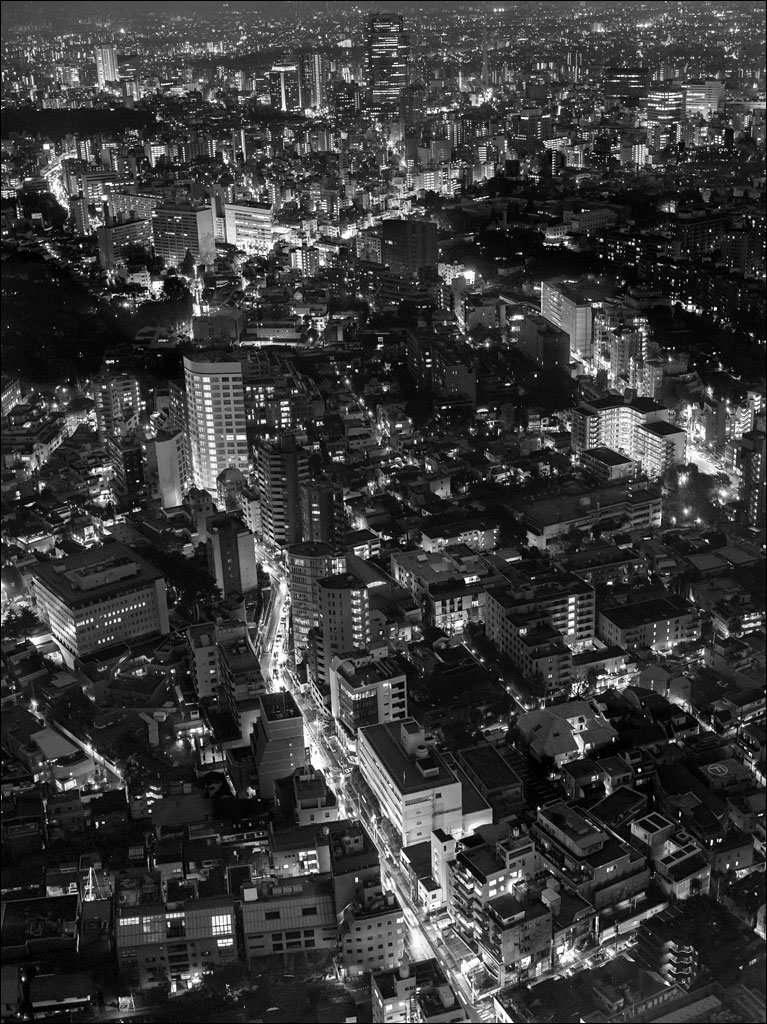 Tokyo at night. Click on the image for a larger view.
Population Density
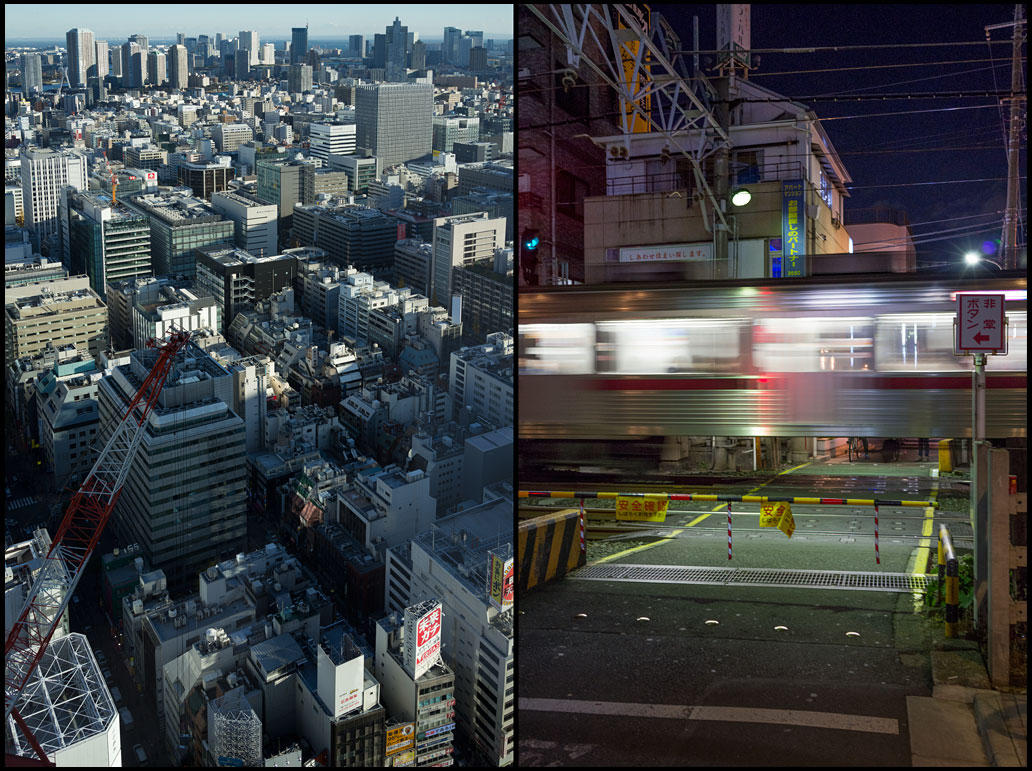 Tokyo is one of the most densely populated cities on the planet. Click on the image for a larger view.
The End of an Era, Part 1
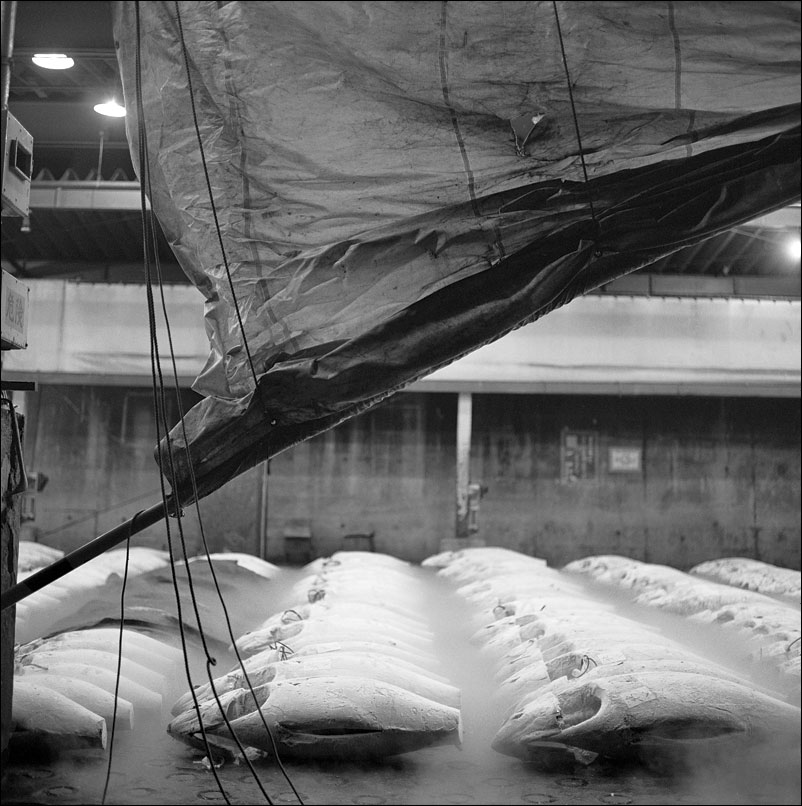 From September 30th, visitors will not be able to view the fish market. October 6th, 2018 marks the last business day for the Tokyo Central Wholesale Market in Tsukiji: the market will move a few kilometers away to Toyosu. I was fortunate to be able to visit the market at its peak in the early 1990s. I produced a small book on this amazing place: Tsukiji: Tokyo Fish Market Suite. While the market is clearly in many people’s hearts, the aging 1935 structure was in need of updating. I am grateful to have experienced this place. Still, access to the fish market and its famous tuna auctions will not be the same. Click on the image for a larger view.
Koenji—On the Streets of Tokyo
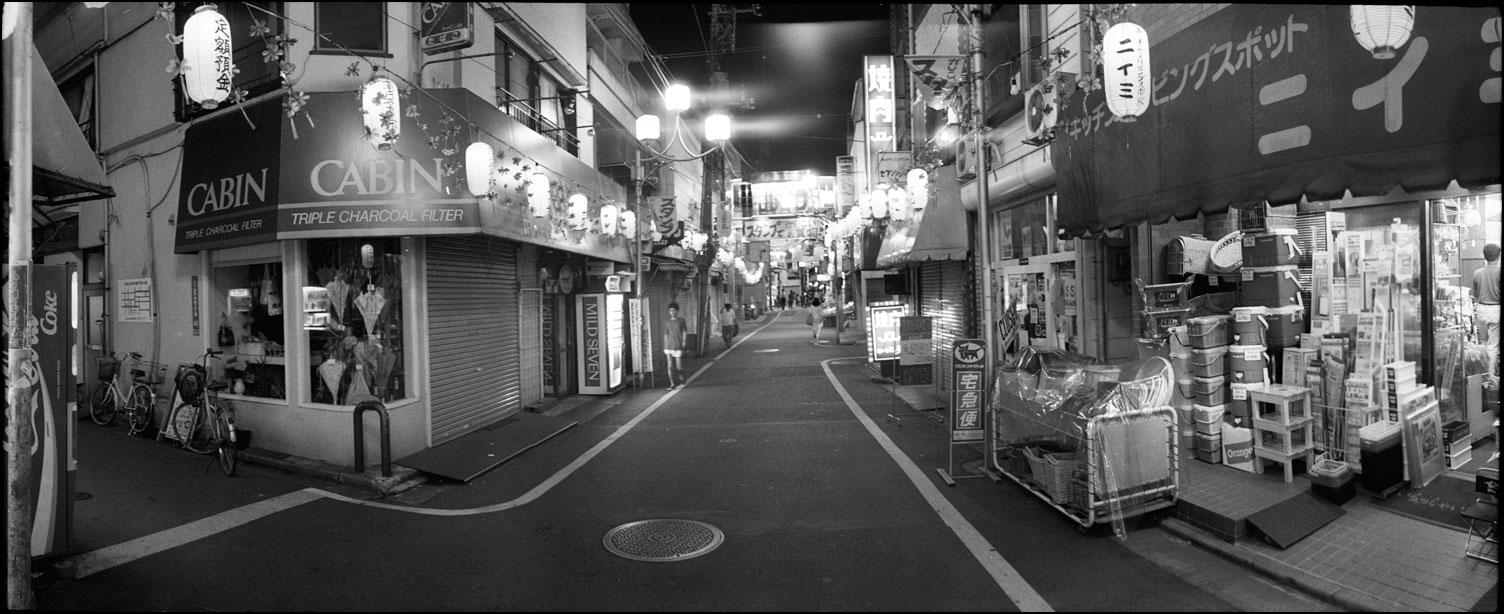 In the 1990s, shopping streets were a common feature of Tokyo neighborhoods and a central locus for communities. Shops were often multigenerational family businesses. Today, large department stores and online retailers are making the economics of running local stores difficult, if not impossible. This street in Koenji from the 90s is typical of many of these thoroughfares. Click on the image for a larger view.
Shinobazu no Ike
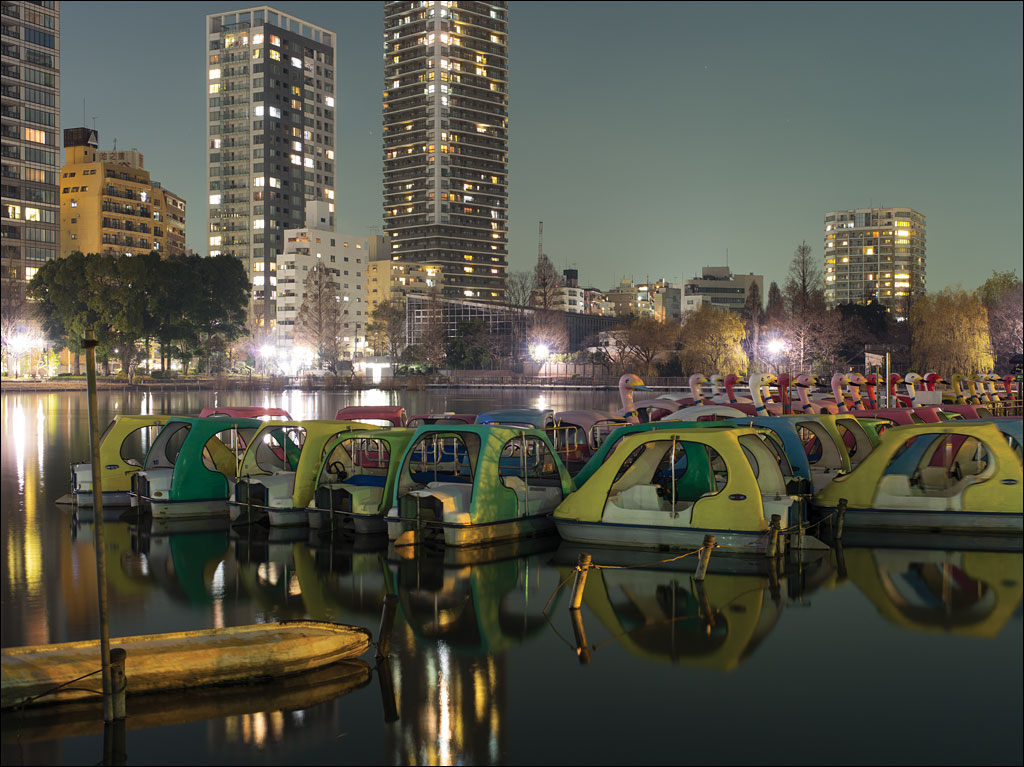 Shinobazu no Ike, or Shinobazu Pond, is located in Ueno Park, Tokyo. This is all that remains of the marsh that has been filled since Edo was established in the seventeenth century. The eastern part of Tokyo was reclaimed from this marsh and is protected by a series of flood walls. During World War II, the pond was used for growing rice. After the war, discussions on whether to convert the area to baseball fields were held. Boating on this pond goes back to 1931. This image is from our book Earth, Water, Fire, Wind, Emptiness: Tokyo Landscapes. Click on the image for a larger view.
