
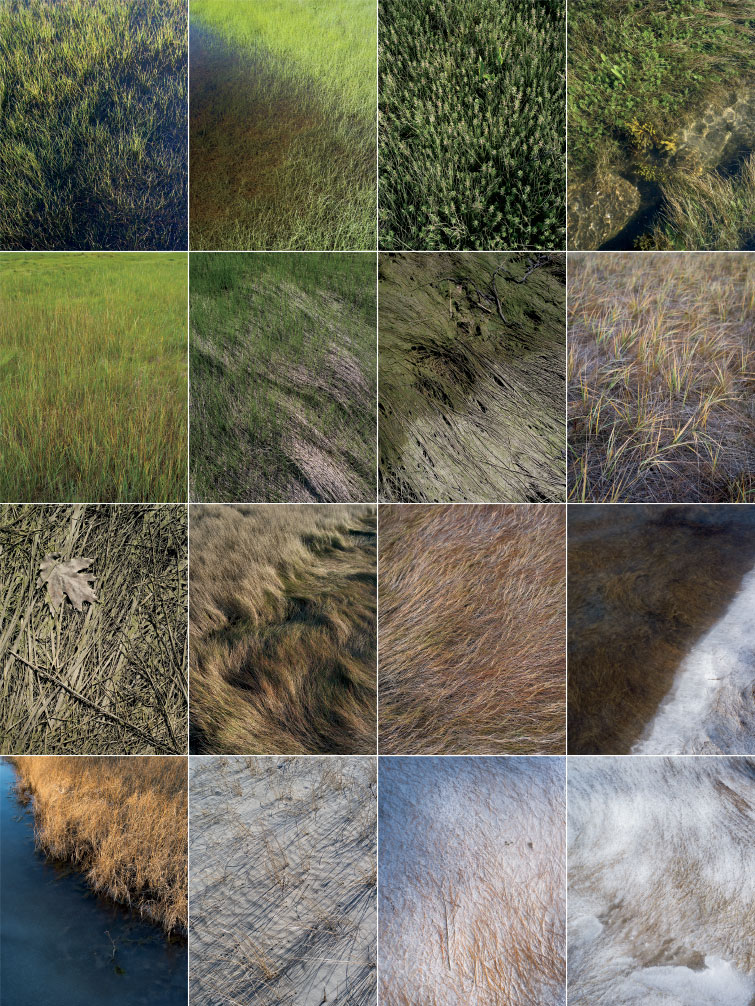
 The salt marshes and dunes at Bates Morse Mountain Conservation Area are always in flux. While we like to think of the season as four monolithic blocks clearly delineating their character to the landscape, the year passes over the land with infinitely variability. No two moments are the same. Click on the image for a larger view.
Tag Archives: Pentax 645D
Changing Seasons, Part 1
 Spring just does not simply arrive in Maine; snow and ice don’t simply vanish. Spring comes like a gentle kiss on the land, slowly melting away winter.
This pond in the salt marshes of Bates Morse Mountain Conservation Area is just opening up. In a month or two, fish fry will populate the water. This pool is isolated from the rivers and streams that cut through the marsh, yet the fish population is stable. Amazingly, the salinity of the water is higher than the ocean that feeds the marsh.
Winter Woods
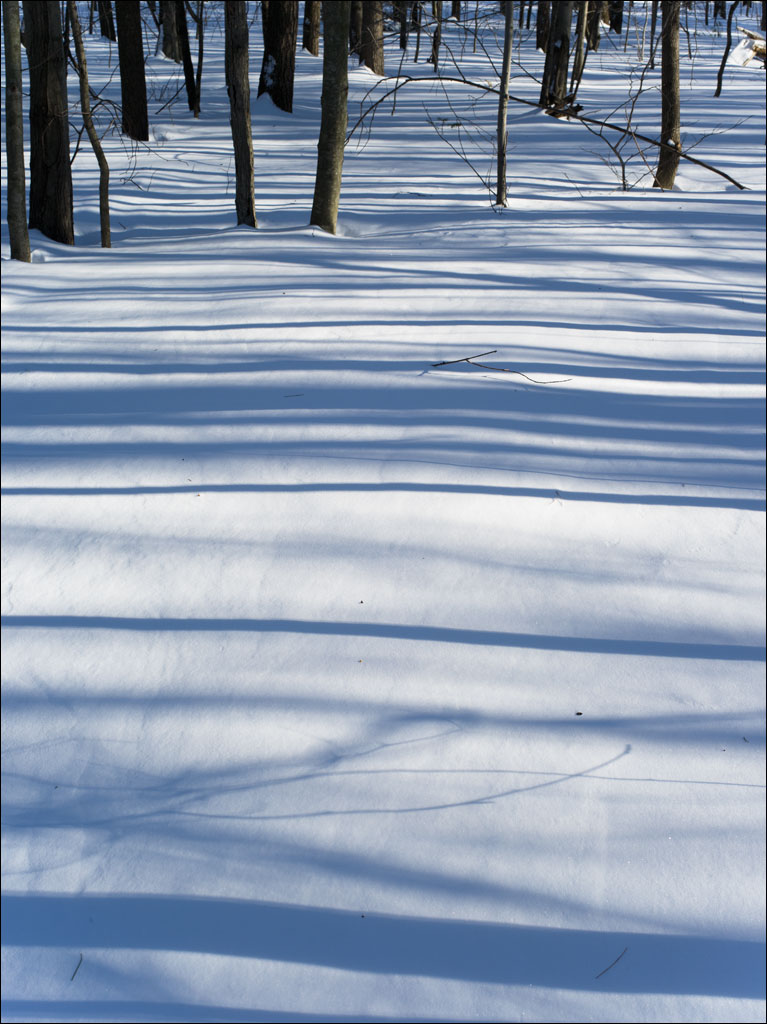 We had two storms in succession, on Thursday and Saturday, with another predicted for next week. Our woods are very peaceful this time of year. The drifting snow makes walking tricky as it is hard to predict whether the snow pack is a few inches deep or a few feet deep. A few of the animals that live here leave the occasion tracks, but many travel under the snow in a network of tunnels.
Sulfur Cinquefoil—Wild Flowers
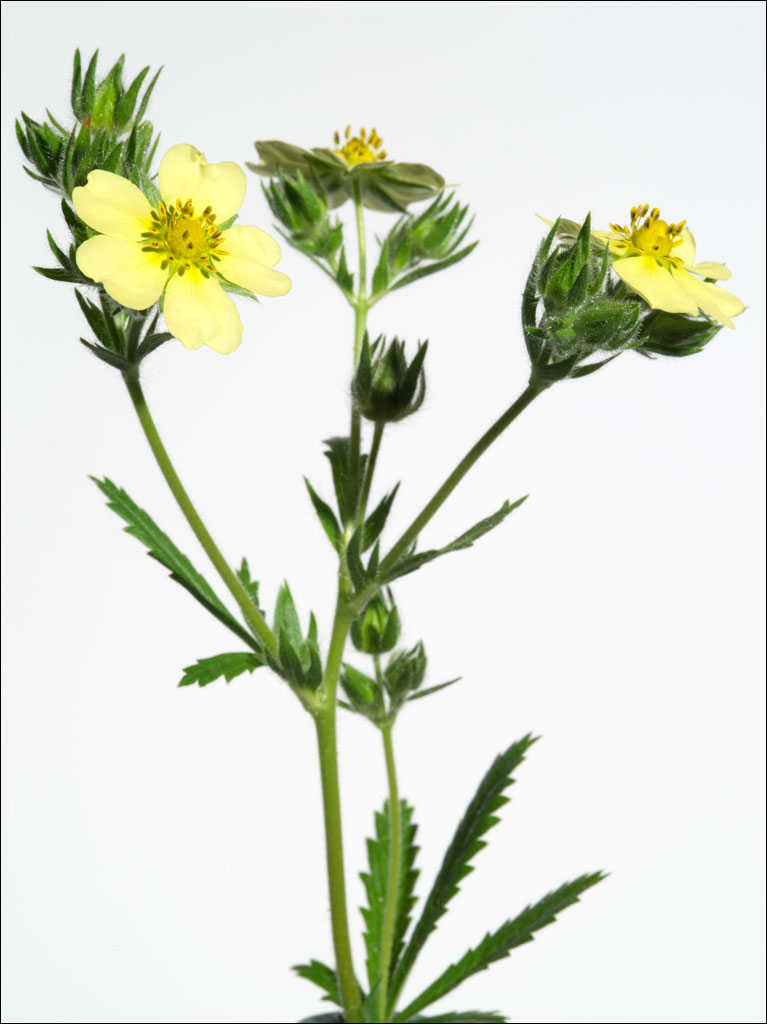 Sulfur Cinquefoil or Rough-fruited Cinquefoil, Potentilla recta, is native to Eurasia, probably originating in the Mediterranean. The plant was introduced to North America where it has thrived.
Yarrow—Edible Weeds
It is important to refer to guidebooks or local foraging experts to identify plants. Please look at our posts as starting points, not as definitive references on plants.
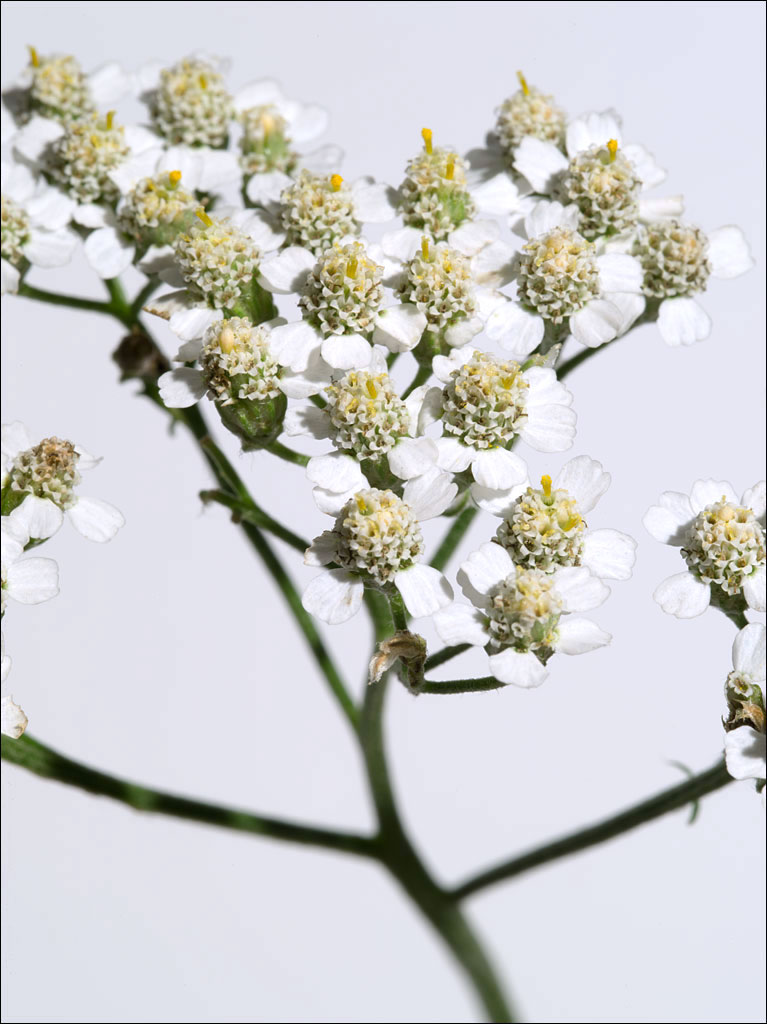 Yarrow, Achillea millefolium, is well known as a medicinal herb. The leaves are bitter, but can be eaten raw or cooked; we put young leaves in a smoothies with other greens. We use the flowers to make tea as well as a vodka tincture we add to tea. For bug bites and cuts, we make a tincture with the flowers and leaves.
Lamb’s-Quarters—Edible Weeds
It is important to refer to guidebooks or local foraging experts to identify plants. Please look at our posts as starting points, not as definitive references on plants. Some medical conditions can be complicated by wild plants.
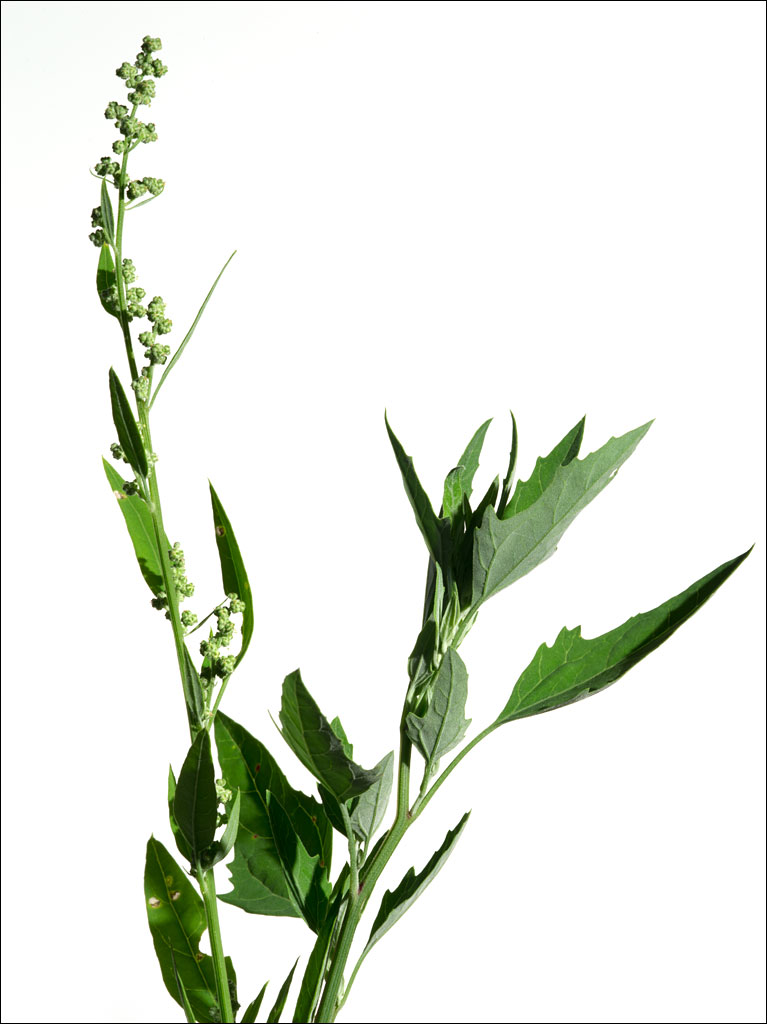 Lamb’s-quarters, Chenopodium album, also known as pigweed, goose foot, and wild spinach, has edible leaves and seeds. While the leaves can be eaten raw, it is not recommend to eat large quantities as the leaves contain saponins. Cooking reduces these. Cooking also reduces the oxalic acid content. The leaves can be harvested from mid-spring into the fall.
The leaves are a good spinach substitute. We add fresh leaves to salads and smoothies. We dry or freeze the leaves for winter to add to smoothies. Like spinach, we steam and sauté the stems and leaves, or add them to soups. In Japan, lamb’s-quarter is also recognized as an edible wild plant. The young leaves are boiled and marinated with sesame seed or peanut butter dressings.
The seeds are very nutritious and can be ground into flour. We have found the seeds to be really small and difficult to harvest. The seeds aren’t wasted: our population of wild birds love them.
White Clover—Edible Weeds
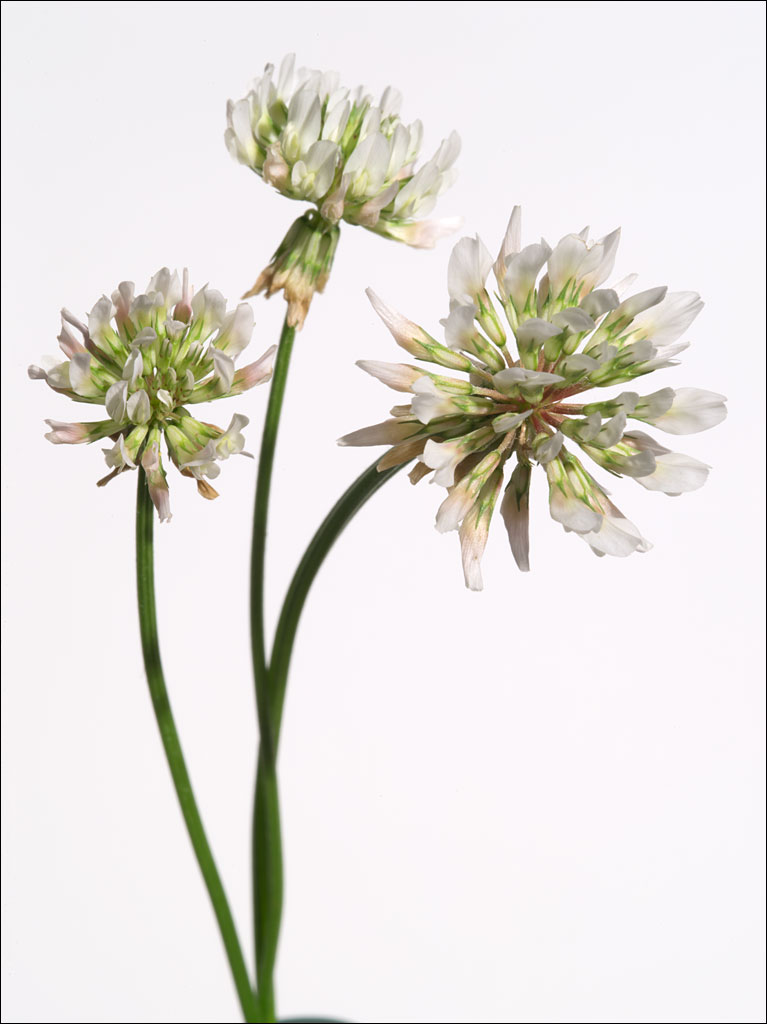 White clover, Trifolium repens, has its flowering head on separate stalks from its leaves. We make tea from the flowers of a variety of clover in our garden. We have found the white clover to be the sweetest. We also add the flower to salads and smoothies.
Before the clover flowers, the young leaves can be used in salads and soups, but we find them too bitter. We have heard that the dried leaves can be used as a vanilla substitute for baking—something we wish to try this summer.
Our Winter Chickadees
 The black-capped Chickadee, Parus atricaillus, is found though out the Northern US from Alaska to Maine. It is the Maine State bird—you see the image of these amazing animals on the our car license plates. They get their name from their call: chick-a-dee-dee-dee. A tame and inquisitive bird, they can get very protective of their garden and are quite vocal when they think you should not be there.
A Chickadee is about 4.75–5.75 in. (12–15 cm) in length, and 0.35–0.42 oz. (10–12 grams) in weight. These birds spend the entire year in Maine, including the winter. To survive the cold, the Chickadee needs to feed during the day to gain fat to use through the night for energy. But with very precious fat reserves, they drop their body temperature by 17°F–21°F (10°C–12°C) to conserve that energy while they sleep. Their plumage is also a far more efficient insulator than on many birds their size. Chickadees do not build winter shelters, but find small places to roost overnight—their tails can appear bent from spending the night in a cramped spot. Naturally, our (their?) bird feeders are never without a Chickadee this time of year.
Rabbit-Foot Clover—Edible Weeds
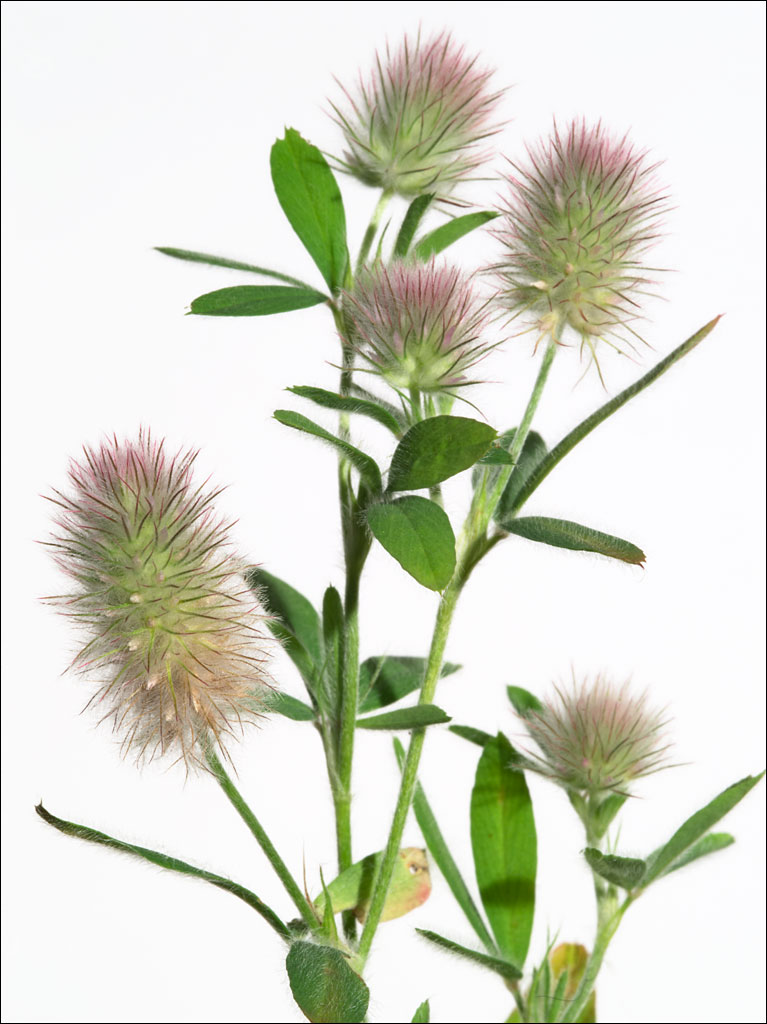
Rabbit-foot clover, Trifolium ravens, is one of the five varieties we have found in our garden. It can grow to a height of around 18 in/45 cm. Like many clover, rabbit foot clover is edible. The young leaves and flowers can be used in salads, as cooked greens, dried as tea, or ground into flour. Clover is rich in protein. We have never found the leaves to be that appetizing. We use dried or raw flowers for tea or add them to muffins or bread for a richer flavor. The dried flowers and seeds can be ground into flour, but we simply find mixing them into whole-wheat flour easier.
Winter Salt Marsh
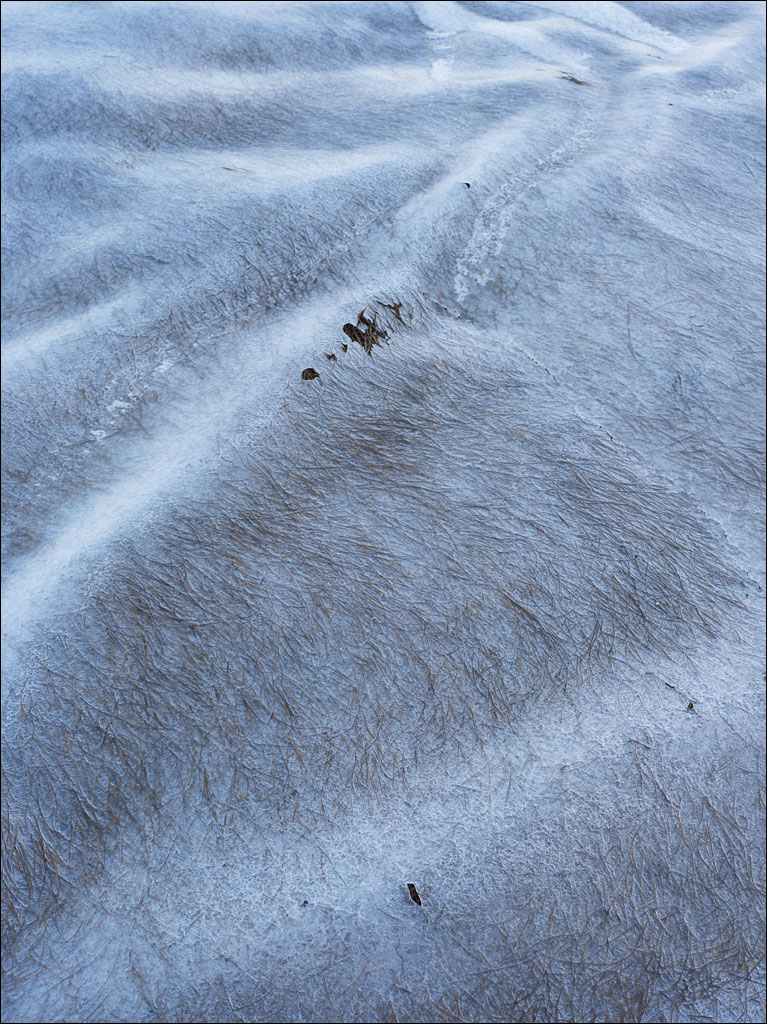 Salt marshes are amazing places. Some of the toughest environments exist right between the land and the sea. Places where extreme changes in salinity, temperatures, and water level can be a daily event. This marsh is on the eastern edge of the Bates-Morse Mountain Conservation Area along the Morse River. Click on the image for a larger view.

