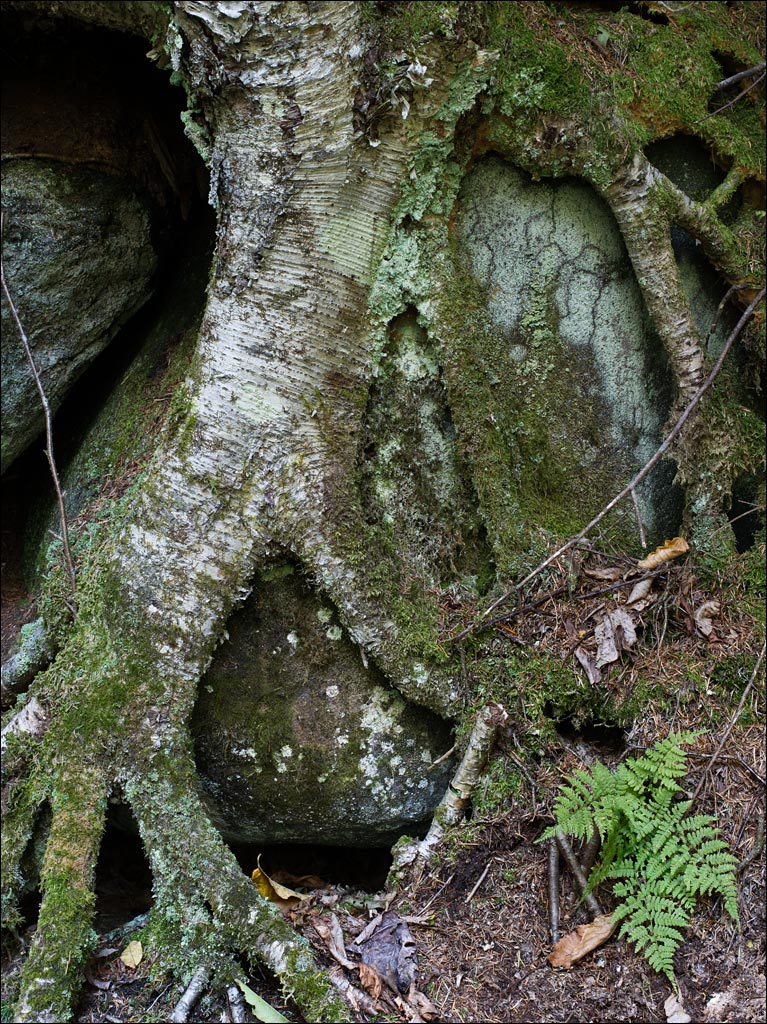
 Why life? Is this self-organizing matter a natural outcome of a universe? Is it the nature of a universe to desire consciousness? The Great Gulf Wilderness was carved out by ice in the last glacial period, leaving a world of rock. Yet, in spite of this harsh terrain, life thrived. Layers upon layers of organisms colonized and built this beautiful world. Unlike the eroded mountain it inhabits, it diversified into unimaginable complexity. Click on the image for a larger view.
Tag Archives: Pentax 645D
Duchess of Oldenburg—Apples of Maine
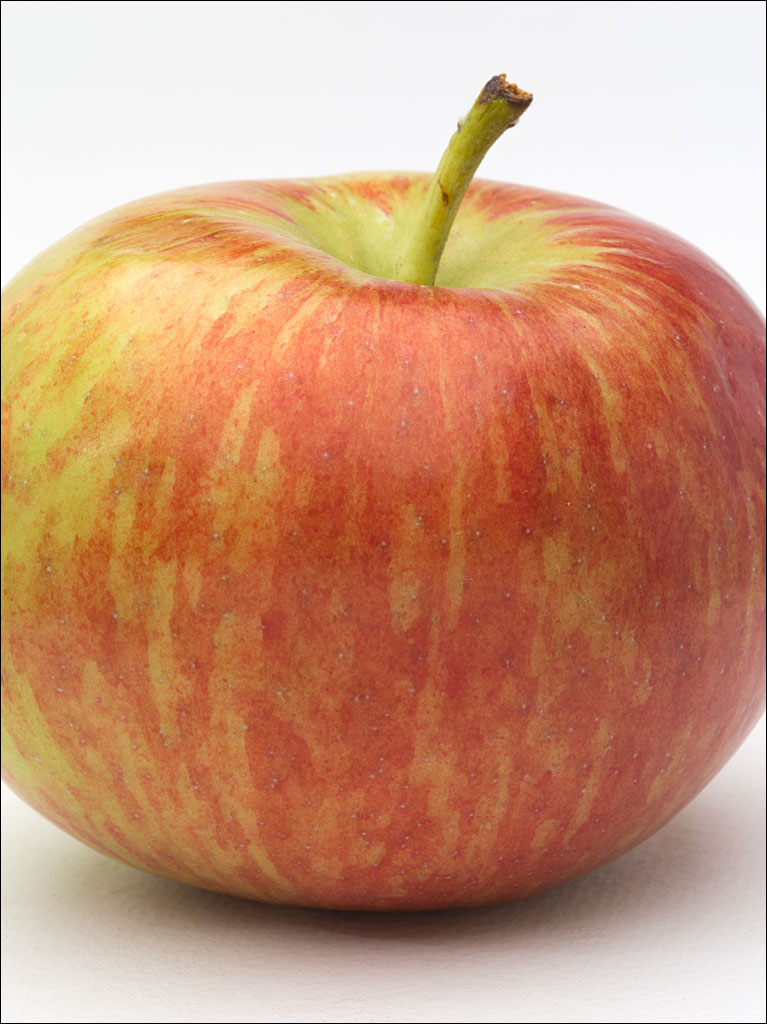 Duchess of Oldenburg is an old variety originating in 18th-century Russia. It is one of the earliest apples of the season, bearing in mid-August. Most people prefer this as a cooking apple for pies or sauces as it is quite tart—it reminds me of a sour grape. Duchess does not store well. Click on the image for a larger view.
The Fall
 With the riot of fall color, comes a melancholy. The vitality of life that burst forth in summer seems to have burnt itself out. The fern that erupted from our forest floor in May, fades back into the soil. Click on the image for a larger view.
Foliage Season
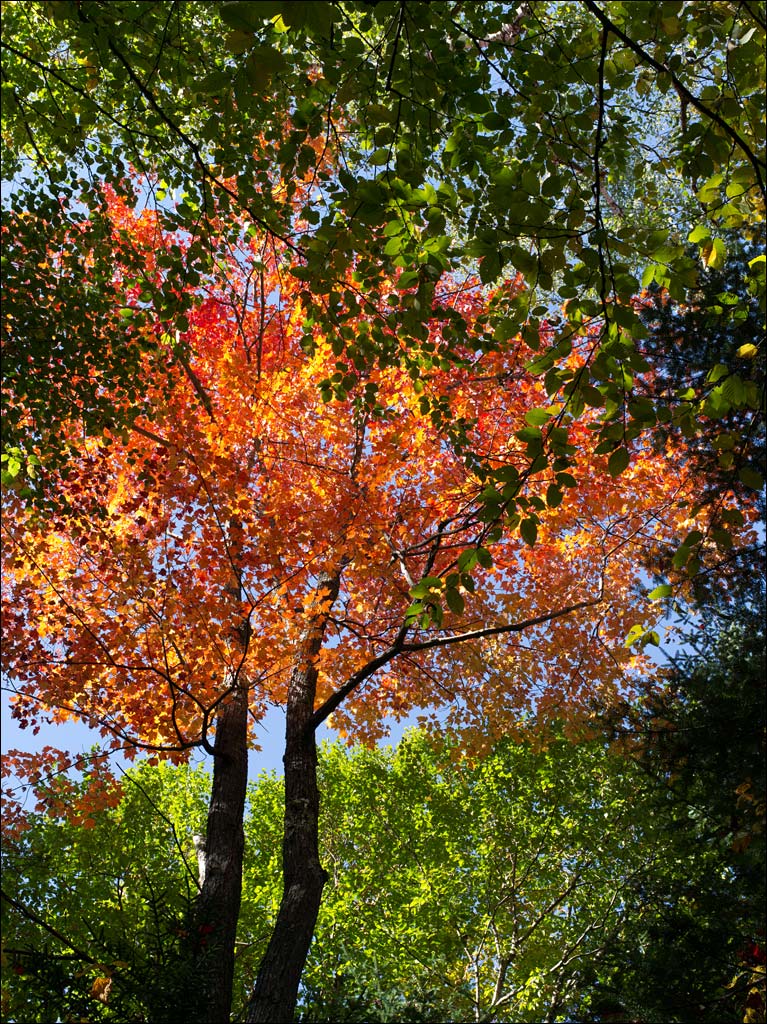 Foliage season has come to New England. The season peaks in mid-October, but I have always enjoyed the period at the end of September, when the blaze of reds and oranges are contrasted with the lingering greens of summer. With the vivid blue skies of autumn, the season is a celebration of color. Click on the image for a larger view.
Ginger Gold—Apples of Maine
 Ginger Gold is a modern variety grown commercially from the 1980s. Clyde Harvey discovered this apple in 1969 when his Virginian orchard was washed out by Hurricane Camille. It is believed to be a mix of Golden Delicious, Newtown Pipin, and an unknown variety. The apple is named after his wife.
Ginger Gold is an early apple that begins to bear in August. The pale green skin is smooth and waxy, and develops a slight red blush when it ripens. The flesh is sweet and rich with a slight hint of lemon. Click on the image for a larger view.
Calm
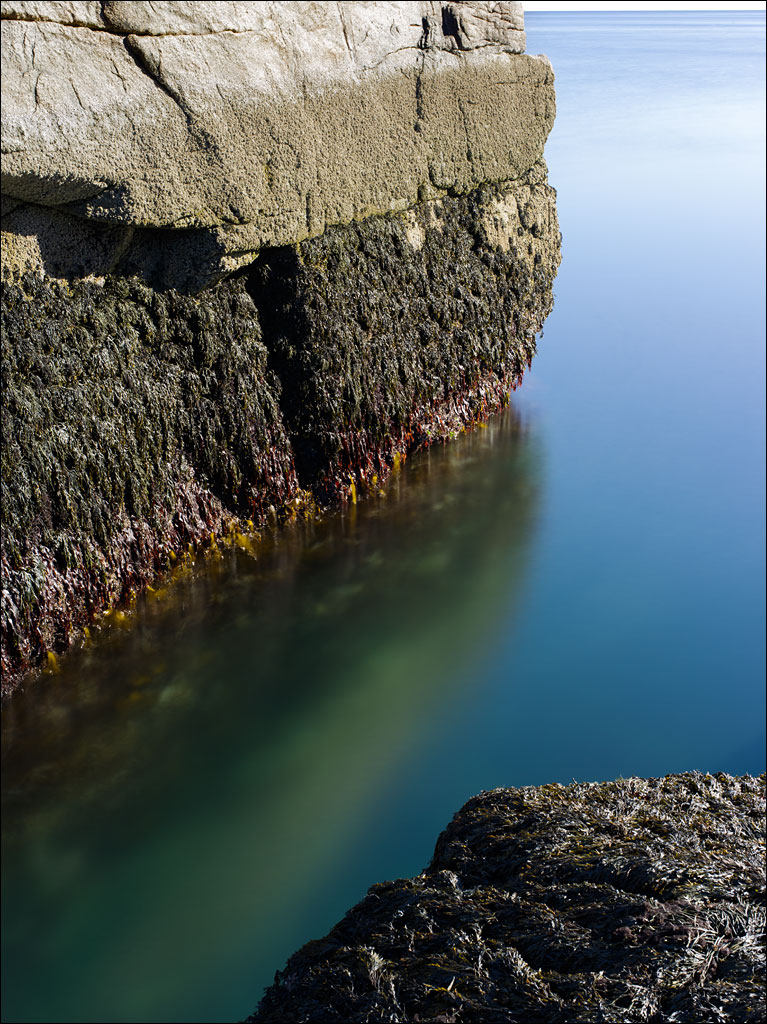 Click on image for larger view.
September Seas
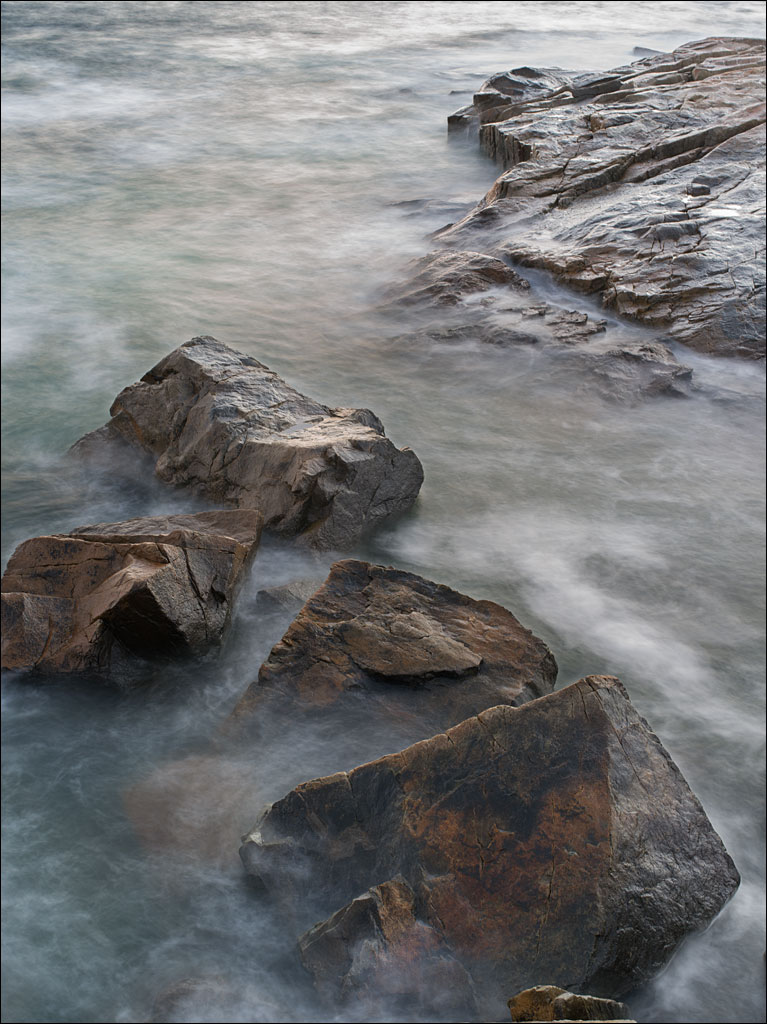 From Schoodic Point in Acadia National Park. The scale of this place is hard to imagine. The rocks in the foreground would dwarf a human. Click on the image for a larger view.
St. Lawrence—Apples of Maine
 The St. Lawrence is an old summer variety thought to have originated in northern New England or Canada. Its appearance is quite striking with dark-red stripes over light green. The white flesh is crisp and light. Very much like a Granny Smith, it is tart with a lemon undertone. The St. Lawrence is a great desert apple, but not a great cooking apple. Like many early apples, this fruit does not store well. Click on the image for a larger view.
Wood, Rock, Water
 The west branch of the Peabody River flows down the Great Gulf Wilderness Area. It is not so much a river like the bodies of flat water that meander through landscapes, but more of an oversized mountain stream moving through and over rocks and boulders. Click on the image for a larger view.
Common Ground Country Fair
 The Common Ground Country Fair is this weekend in Unity, Maine. If you love growing fruit and vegetables, raising livestock, living self-sufficiently, or eating good food, this is a great event to attend. There is fun for the whole family—bring your kids or take a few home with you. Click on the image for a larger view.

