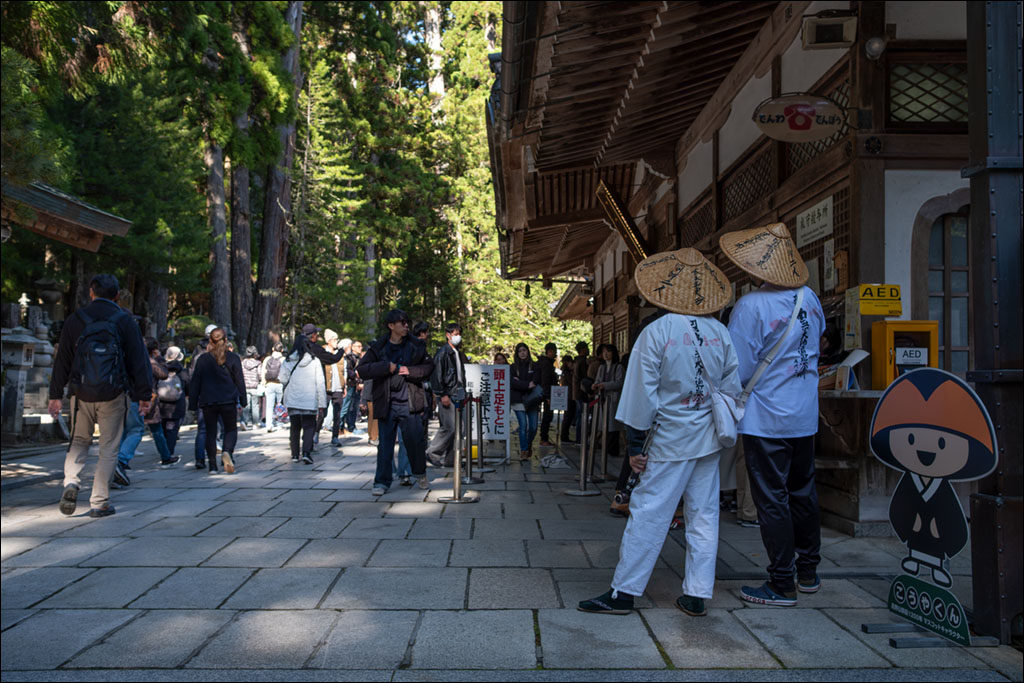
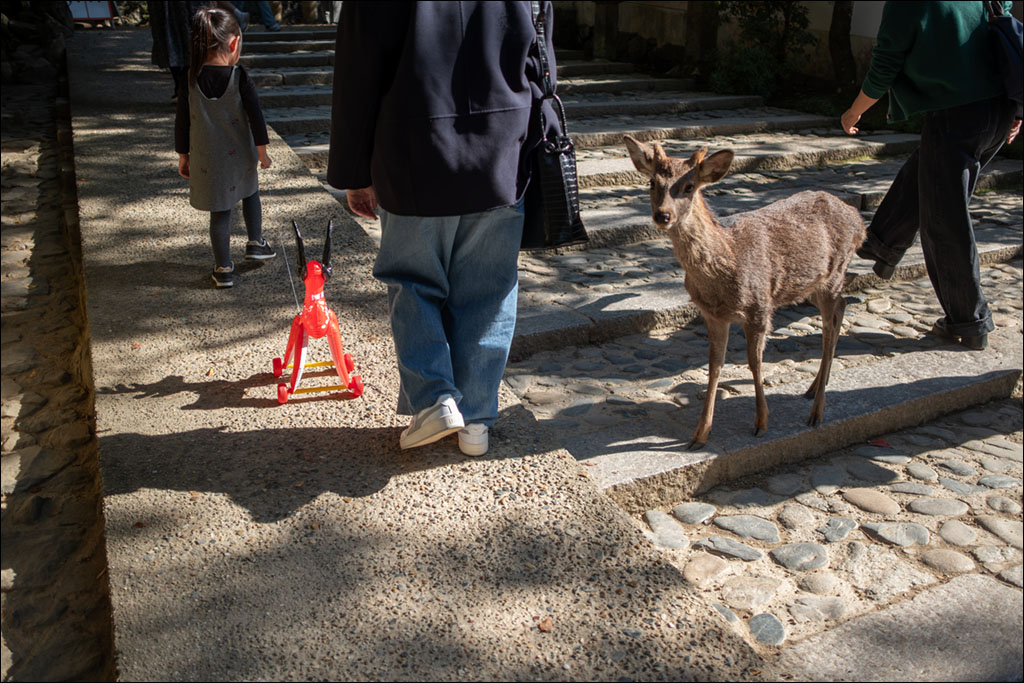
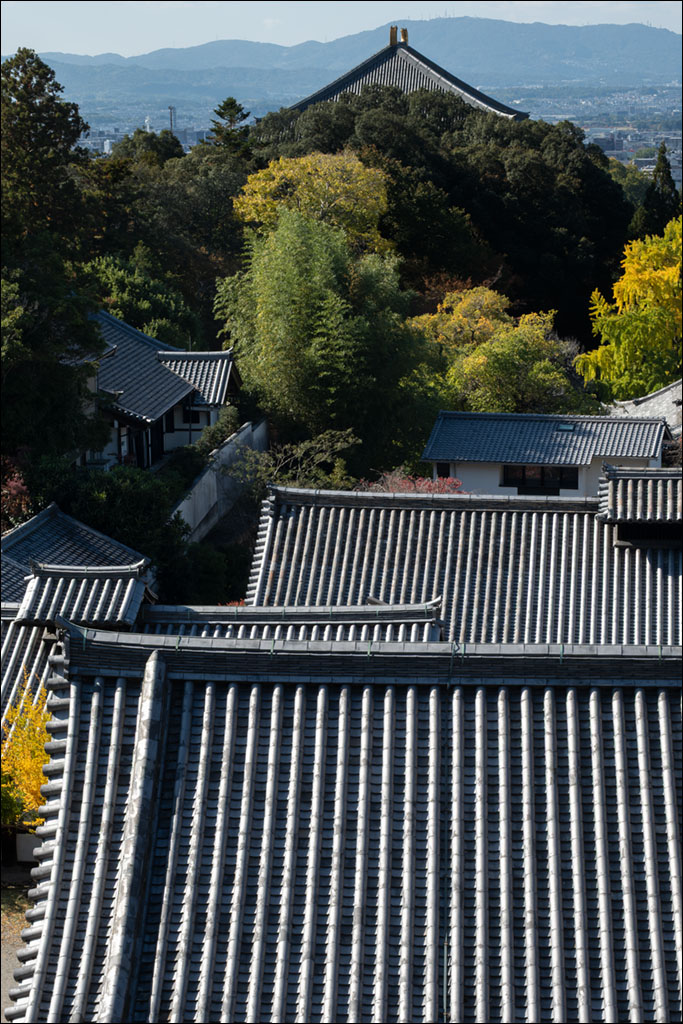
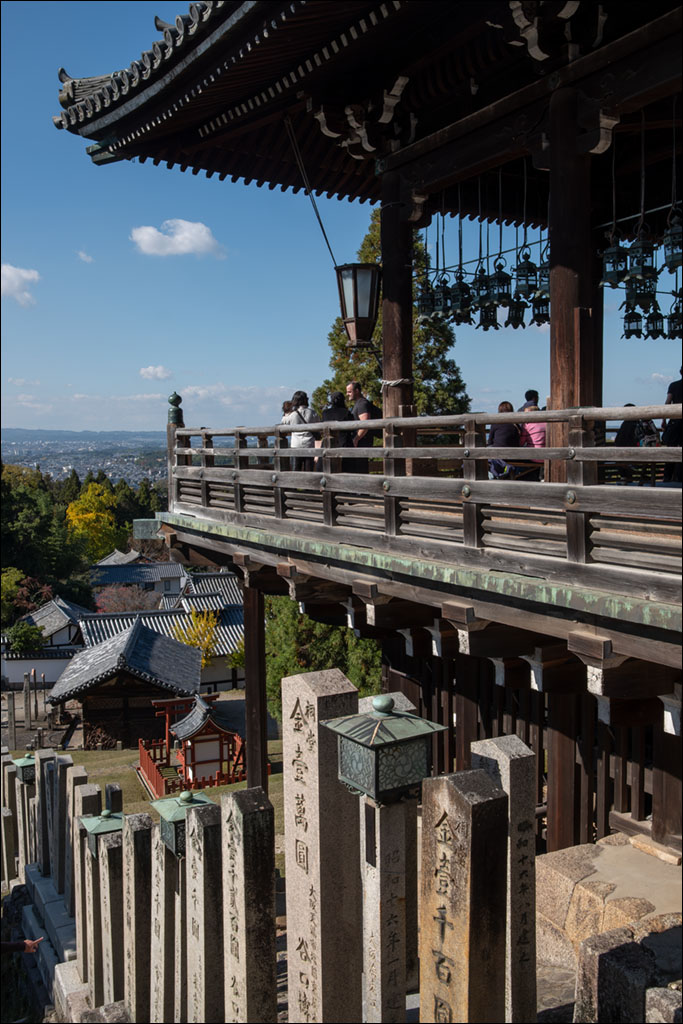
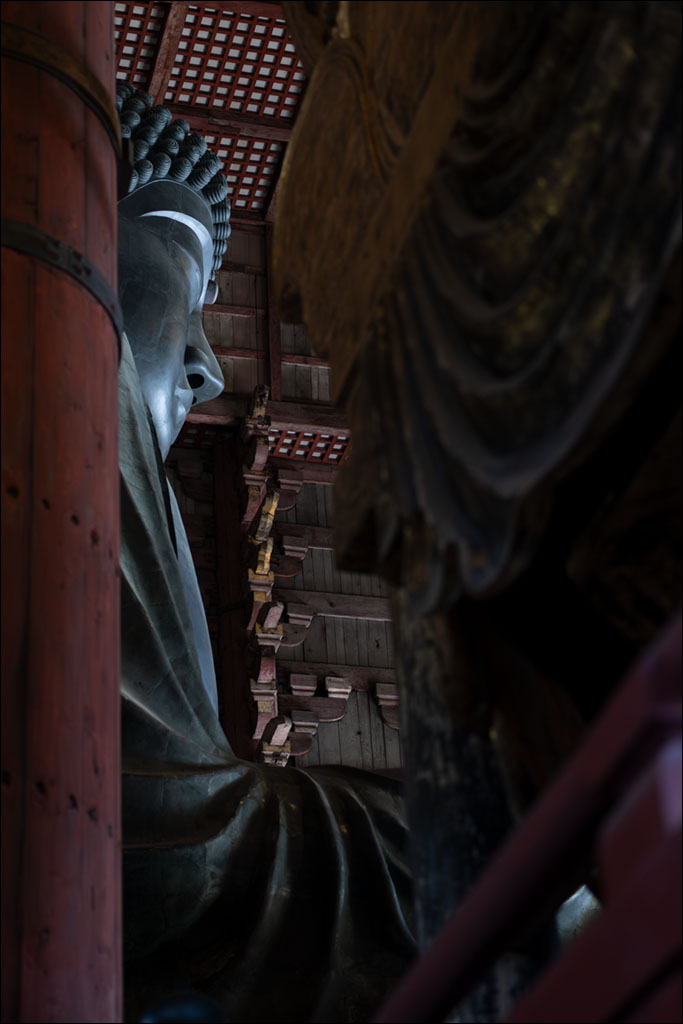
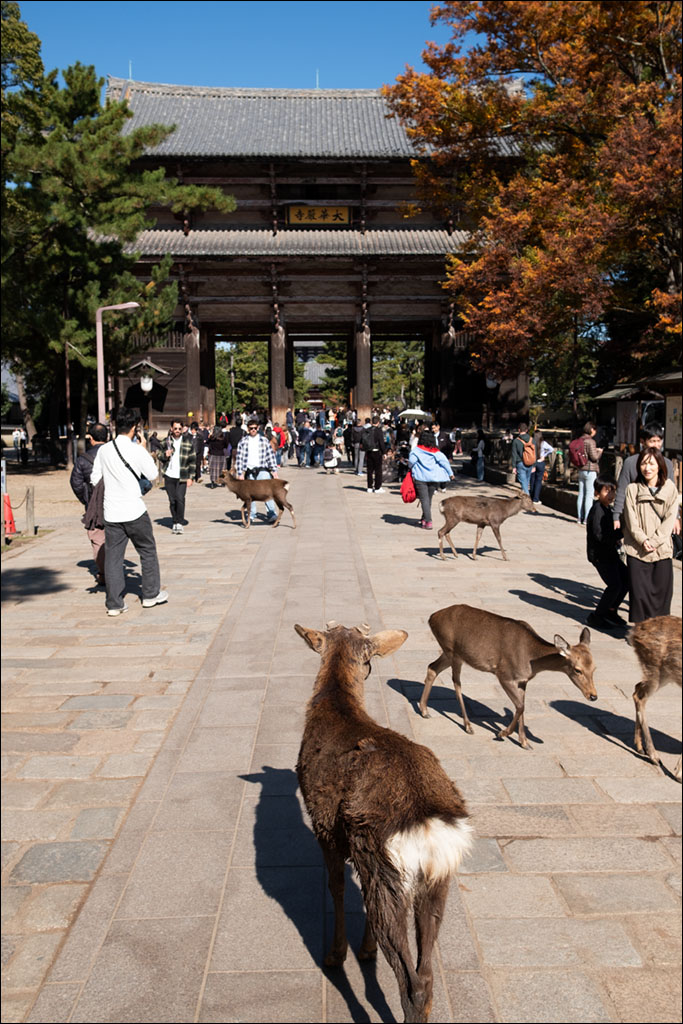
If anyone has seen the work of the director Hayeo Miyazaki, a common motif may strike you: trees. In the movies Castle in the Sky, My Neighbor Totoro, and Princes Mononoke, powerful, towering arboreal characters appear. The early Japanese believed trees, particularly evergreen trees, were dwellings for deities from heaven. With roots firmly in the earth and branches reaching into the sky, living off the wind and sun, and lifespans greater than any human, how could these beings be anything but divine. The Indian poet Rabindranath Tagore said, “trees are the Earth’s endless effort to speak to the listening heaven.” Click on the image for a larger view.
Category Archives: Japanese Religion
Tokyo Ghost Story
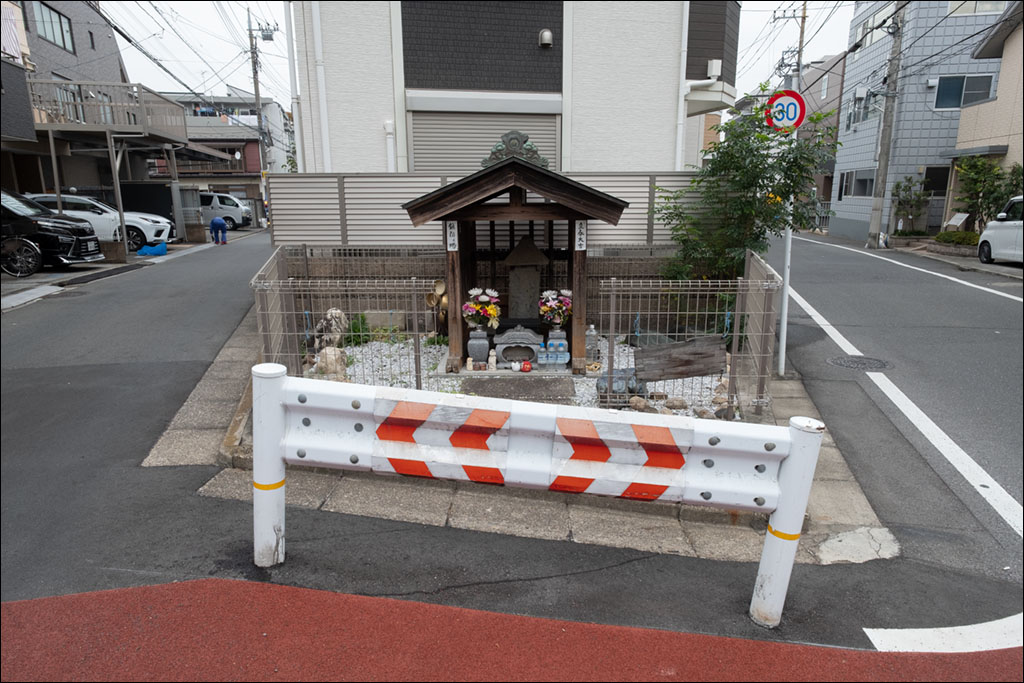
Oiwa Inari Tamia Shrine is located between Tokyo station and the Sumida river. This small shrine is connected to one of the most popular ghost stories in Japan, Yotsuya Kaidan, a 19th century Kabuki play. The story’s main character is a woman named Oiwa. Actors visit this shrine to pay respect to her spirit before performing her role.
Oiwa is betrayed by a husband that murdered her father. She is horribly disfigured by a poisoned face cream given to her by Oume, a rival for her husband Iemon. Iemon, repulsed by Oiwa’s appearance, sends an accomplice to assault her to give him grounds for divorce. His partner cannot go through with the deed and reveals the plan to Oiwa. Showing Oiwa her disfigured image in a mirror, she is incensed. In her rage, she fatally injures herself with a sword. She dies cursing her husband, becoming an onryô, a vengeful spirit. By the end of the story, her spirit is revenged. A bloody tale, but a popular one.
Click on the image for a larger view.
Satori
Satori is the Japanese word for enlightenment, awakening. Zen Buddhist believe this does not happen gradually, but comes like a clap of thunder. D. T. Suzuki, the Japanese Buddhist scholar and philosopher, describes it as “seeing into your own nature,” “…to see our own ‘original face’ even before we were born, to hear the cry of the crow even before it was uttered, to be with God even before he commanded the light to be.”
The image is of Binzuru on the island of Miyajima in western Japan. I have written about the legend of this charming figure before. This type of scarf is popular with school girls and a kind offering this time of year. Click on the image for a larger view.
Pilgrim
Pilgrims flock to the island of Shikoku in Japan. Through the centuries, the fundamental practice of these pilgrims has not changed: they walk, they pray. To complete the entire route, a little over 1,200km or 750 miles, takes most travelers about fifty days. Some have claimed do this in thirty—a formidable feat. The path is mostly on roads. It hugs the coast and crosses mountains.
One hundred years ago, the average pilgrim is said to have spent about one hundred days to complete the pilgrimage. Roads, general health, and modern gear are mostly responsible in changing that. I am grateful of not having to wear the traditional straw sandals and cotton robes, which must have made this journey even harder.
This pair of pilgrims from the early 20th century are described as monks, but wrongly cited as carrying statues of the Buddha—the image on their backs is of Kobo Daishi. The photograph is from the book By Nippon’s Lotus Ponds; Pen Pictures of Real Japan by Matthias Klein and published in 1914. Click on the images for a larger view.
Shugyo Daishi and the Pilgrim
The trail between temples 11 and 12 was enveloped in fog the day we travelled it. The mountain path followed a forested ridge. Then, strangely, the dirt trail ended in a flight of stone steps. As we climbed, a figure materialized from the trees.
We had reached Jyouren hermitage, a bangai, an unnumbered temple, one of over a hundred such places on the 88 Sacred Places of Shikoku Pilgrimage. The statue is of Shugyo Daishi. This is not the image of Kobo Daishi, the saint pilgrims follow and the one that attained enlightenment, but the man that was seeking that enlightenment.
The tree behind the statue was said to have been planted by Kobo Daishi when, in a dream, he had a vision of the Buddha Dainishi-nyorai. Click on the image for a larger view.
Passport to Enlightenment
The pilgrim to the Eighty-eight Sacred Places of Shikoku Pilgrimage carries a small book, nokyocho, in which the seal of each of the temples is inscribed, in this case, temple 84. It is one of the most important records of the journey and is treasured as a sacred object. If the pilgrim undertakes another pilgrimage, the same book is used with a new seal being inscribed over the previous ones. Pilgrims that have completed the path multiple times have pages covered red and black from the number of inscriptions. Click on the image for a larger view.
Futon Daiko: Celebration
The Futon Daiko festival at Mozu Hachiman Shrine in Sakai, Japan is a lunar festival, taking place in late September or early October on the weekend closest to the full moon. Nine town participate in this event.
These festivals are a celebration of community. A hundred or more people are need to carry these floats and far more in the community are needed to support the event. The bonds in these communities are strong and the festival maintains and strengthens them. Click on the image for a larger view.
Kumadanaji, Temple 8—Shikoku Pilgrimage
Kumadanaji, Bear Valley Temple, is not a scary as it sounds. Tucked in the end of a small valley, it is a peaceful place. This temple has one of the most impressive compounds on the pilgrimage. The main hall can be seen on the right and the steps on the left lead to the Daishi hall. We climbed the bell tower to ring the temple bell—two good friends, both pilgrims before us, had taken shelter at this temple and were the inspiration for our pilgrimage.
At Kumadanaji, Kobo Daishi is said to have had a vision of the Shinto god of Kumano, who bestowed upon him a small statue of Kannon Bosatsu (Avalokitešvara). Kobo Daishi carved the temple’s main image of Senju Kannon (Avalokitešvara of a thousand hands) to enshine it. Click on the image for a larger view.
The 88 Scared Places of Shikoku Pilgrimage
The 88 Scared Places of Shikoku Pilgrimage is probably the most famous pilgrimage in Japan. The route circles the island of Shikoku and takes about 45–60 days to complete on foot, although there are other ways pilgrims choose to travel. Naomi and I had the great fortune to walk this path three times. This year we will be publishing our experience of this remarkable journey.
These pilgrims are praying at the Daishi hall of Ryõzenji, temple number one. The four characters on the back of the hat (同行二人) are the refrain of the pilgrim—Dõgyõ ninin. Simply translated it means the same journey, two people. The second person to which it refers is Kobo Daishi, the founder of Shingon Buddhism, saint, poet, calligrapher, civil engineer, and the person credited in making this pilgrimage. While the pilgrimage is nonsectarian, every pilgrim puts their faith in O-Daishi-sama, as he is known.
Futon Daiko: Kaidan

The Futon Daiko festival at Mozu-Hachiman Shrine in Sakai, Japan is an amazing event. Each of the nine towns have their own float, or dashi. Two teams of fifty to seventy men are needed to carry these two and a half ton structures. And they do not simply carry them, but march in a straight-legged gait and sing.
The real trial for these men are the steps, or kaidan, that lead to the main shrine. After carrying the dashi all day, the floats are taken up and down these steps multiple times. It is a dangerous maneuver, but a crowd pleaser. Click on the image for a larger view.